
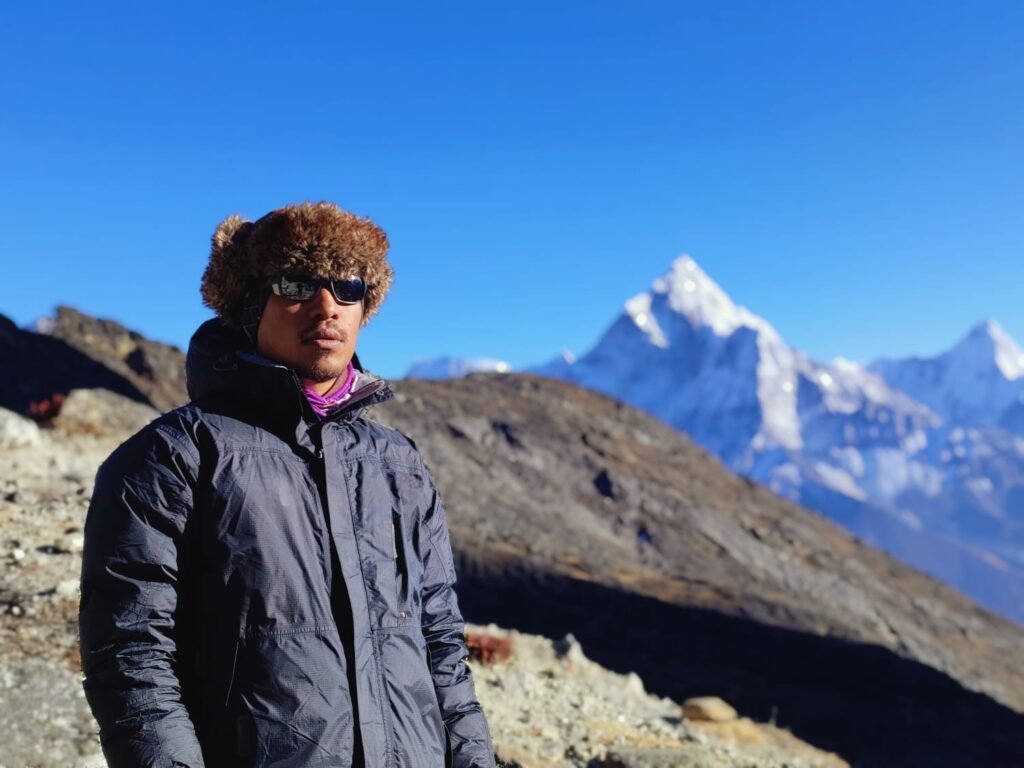


# Annapurna Trek Trip for the Adventure Lover
Why the Annapurnas Are an Adventure Lover’s Playground
If your idea of a holiday is a beach lounger and a cocktail, stop reading. The Annapurna region of central Nepal is one of the most concentrated adventure landscapes on Earth – a single conservation area where you can walk beneath 8,000-metre walls, cross a 5,416-metre pass, sleep in Buddhist monasteries, paraglide off a ridge, and mountain-bike a full road loop, all in one trip. Few places pack so much raw, varied terrain into a trekking region you can reach by road from Pokhara in a few hours, and fewer still let you stack altitude, exposure, and speed into a single itinerary without changing countries.
Annapurna Circuit Treks is a Pokhara-based operator run by licensed local guides, and we have spent years matching thrill-seekers to the right dose of Annapurna. This guide is written specifically for the traveller who measures a trip in adrenaline and memories rather than kilometres ticked off a list. Whether you want a hard high-pass circuit, a sharp ridge walk, or a layered holiday of trekking, climbing, and flight, the region delivers it. Start with our [things to do in the Annapurna region](https://annapurnacircuittreks.com/things-to-do-in-annapurna-region/) to see the full menu, then narrow it down with the routes below, and remember that the adventure begins the moment you leave the lakeside behind.
Defining Adventure on the Annapurna Trails
Adventure means different things to different trekkers, and the Annapurnas speak to all of them. For some it is the physical test of a high pass at altitude, lungs burning in thin air as the world thins to a cold blue. For others it is the exposure of a narrow ridge with a 2,000-metre drop on either side and nothing but a prayer flag between them and the void. For a third group it is the quiet dare of travelling self-sufficient through villages where no one speaks their language and the only schedule is the sun.
We sort adventure into three bands. The entry band is a vigorous day hike or a short teahouse trek with big views – still a genuine step up from a city walk and a real confidence builder. The intermediate band is a multi-day route crossing a 3,000-4,000-metre ridge where altitude starts to matter and the air gets honest. The expert band is the full Circuit over Thorong La or a peak-climbing objective above 5,000 metres where rope, crampon, and judgement all come into play. Knowing your band is the first job of planning, and our [best-time guide](https://annapurnacircuittreks.com/best-time-to-trek-annapurna/) helps you pick a season that matches the intensity you want without baiting the weather.
The Annapurna Circuit – The Classic Big Adventure
The Annapurna Circuit is the route that put the region on every serious trekker’s map, and it remains the definitive adventure loop on the planet for sustained variety. Beginning near Besisahar at about 760 metres and circling the entire Annapurna massif, it climbs through subtropical forest, terraced farmland, Tibetan-style villages, and finally the high, dry rain shadow of Manang before the crowning challenge: the Thorong La at 5,416 metres, higher than most European peaks and broad enough that the crossing takes the better part of a day.
What makes the Circuit an adventure rather than just a long walk is its range. You change climate zones, cultures, and ecosystems every few days, and the terrain never lets you get complacent – one morning you are fording a warm river on a suspension bridge, the next you are crunching across a moraine under a wall of ice. It is also flexible: you can shorten it with a 4×4 transfer on the lower road, extend it with the Tilicho Lake detour, or reverse it to start from Jomsom. The [Annapurna Circuit trek package](https://annapurnacircuittreks.com/trip/annapurna-circuit-trek/) is our most-requested adventure booking, and the [two-week Circuit day-by-day plan](https://annapurnacircuittreks.com/two-week-annapurna-circuit-day-by-day/) shows exactly how the days unfold from the Marsyangdi valley to the Kali Gandaki.
Thorong La – The High-Pass Test
Thorong La is the psychological centrepiece of the Circuit and the single most talked-about challenge in the region. At 5,416 metres it is higher than almost any summit a casual trekker will ever stand on, and the crossing is a long, cold, pre-dawn push – typically setting out from Thorong Phedi or High Camp around 3 or 4 am to reach the top before the wind rises and the sun turns the snow to porridge. The air at the top holds less than half the oxygen of sea level, so every step is a small negotiation with your own lungs.
The adventure is real but manageable with the right build-up. We insist on proper acclimatisation in Manang, a conservative start time, and a hard turn-around rule if the weather turns. Our [altitude sickness guide](https://annapurnacircuittreks.com/altitude-sickness-annapurna-circuit/) and [acclimatisation strategy for Tilicho and Thorong](https://annapurnacircuittreks.com/acclimatisation-strategy-tilicho-thorong/) explain the physiology we build into every crossing, and the HRA clinic at Manang is a safety backstop we use. Summiting that wind-scoured saddle as the first light hits Dhaulagiri is, for many of our guests, the single best moment of their lives – a raw, earned high that no viewpoint photo can fake.
Annapurna Base Camp – The Sanctuary Push
If you want a shorter, sharper adventure with a dramatic finish, Annapurna Base Camp at 4,130 metres is the answer. The trail climbs steeply from the Modi Khola valley into a natural amphitheatre ringed by Annapurna I, Annapurna South, Machhapuchhre, and Hiunchuli – a 360-degree wall of snow and rock that feels like the end of the world. Unlike the Circuit’s long ramp, ABC compresses the gain into a few days of serious vertical, which is exactly what makes it feel like an expedition.
The adventure here is the vertical density packed into a short window and the sense of being swallowed by the mountains rather than standing above them. It is achievable for fit first-timers but still demands respect for altitude and a steady pace on the final steep day. The [Annapurna Base Camp trek package](https://annapurnacircuittreks.com/trip/annapurna-base-camp-trek/) is built for the time-pressed adventurer, and the [ABC trek guide](https://annapurnacircuittreks.com/annapurna-base-camp-trek-guide/) covers the route, timings, and the Jhinu hot-spring reward on the way down. Pair it with the [Jhinu versus Landruk route](https://annapurnacircuittreks.com/abc-via-jhinu-vs-landruk-route/) for a quieter descent, and consider the [best sunrise viewpoints guide](https://annapurnacircuittreks.com/best-sunrise-viewpoints-annapurna/) for the dawn moments that make the climb worth every aching calf.
Mardi Himal – The Steep Ridge Alternative
Mardi Himal is the region’s edgy newcomer – a narrow ridge walk that stays close to the Annapurna crest, with a High Camp near 4,500 metres perched on the edge of the world. Unlike the broad Circuit, Mardi is intimate and exposed: you are on a knife of forest and rock with the Modi Khola valley falling away on one side and the sanctuary on the other, often above a sea of cloud at dawn.
For adventure lovers it is a perfect three-to-four-day hit of exposure and big views without the two-week commitment or the high-pass risk. The trail is short and steep, so it packs a lot of adrenaline per day, and the narrow ridgeline demands focus in a way a wide valley path never does. The [Mardi Himal trek package](https://annapurnacircuittreks.com/trip/mardi-trek/) and the [Mardi Himal guide](https://annapurnacircuittreks.com/mardi-himal-trek-guide/) lay out the ridgeline logistics, and the [best sunrise viewpoints guide](https://annapurnacircuittreks.com/best-sunrise-viewpoints-annapurna/) lists the Mardi lookout among the region’s finest dawn perches. It is the route we recommend to trekkers who want the Circuit’s drama in a quarter of the time.
Peak Climbing – Beyond Trekking
When walking is not enough, the Annapurnas offer genuine mountaineering. Several trekking peaks in and beside the conservation area – Chulu East and Chulu West above the Circuit, plus Mardi and other objectives – let fit trekkers rope up and stand on a snow summit. These are not technical Everest-style climbs, but they demand crampons, an ice axe, and a guide who can read glacier conditions and fixed lines in the cold.
Peak climbing is the natural next step for the adventure lover who has already trekked the Circuit and wants to go higher under their own effort. The [peak climbing activity](https://annapurnacircuittreks.com/activities/peak-climbing/) page explains what we offer, and it pairs naturally with a Circuit approach so you acclimatise on the trail before the climb rather than gambling your body on a rushed ascent. Our guides are licensed and experienced on these flanks, and we carry the rope and safety kit you should never improvise. Climbing adds the vertical world of rope and ice to the horizontal world of the trail – a different kind of afraid, and a better kind of proud.
Rock Climbing and Canyoning
Not every Annapurna adventure happens on a trail. Around Pokhara and in a few river gorges within the region, rock climbing and canyoning give you a vertical, hands-on counterpoint to walking. Canyoning means roping down waterfalls and plunging into turquoise pools fed by snowmelt; climbing means working real basalt and limestone faces with a local instructor who knows the line and the ledge.
These activities are perfect rest-day or pre-trek add-ons that keep the adrenaline flowing while your legs recover from a long descent. The [rock climbing and canyoning guide](https://annapurnacircuittreks.com/rock-climbing-canyoning-annapurna/) covers locations, difficulty grades, and what to bring, and our [day hikes around Pokhara](https://annapurnacircuittreks.com/best-day-hikes-around-pokhara/) page links the easy approaches. Many of our adventure guests book a canyon session the day before a big trek starts – it is a different muscle group and a great way to meet the mountains up close before the long days on foot, and it builds the trust in your own grip that high routes later reward.
4×4 and Jeep Safaris into the Hills
Adventure is not only about walking. The road network into the Annapurnas has improved dramatically, and a 4×4 drive up the Marsyangdi and Kali Gandaki valleys is its own brand of thrill – switchbacks stacked on switchbacks, landslides-turned-roads, and viewpoints that appear around every blind bend with a drop that makes your stomach lift. A jeep safari gets you deep into Manang or Mustang country in a day where trekkers take a week on foot.
The [4×4 jeep safari activity](https://annapurnacircuittreks.com/activities/4×4-jeep-safari/) and the [4×4 drive to Manang and Tilicho package](https://annapurnacircuittreks.com/trip/7-days-4×4-drive-manang-tilicho/) let you combine the comfort of a vehicle with the drama of high altitude. It is an ideal adventure for travellers short on time or those who want to stand at Tilicho Lake at 4,949 metres without the full trek in, and it is the backbone of our overland approach described in the [getting-to-Annapurna guide](https://annapurnacircuittreks.com/annapurna-travel-guide-2026/). We use experienced mountain drivers who know every washout on the route, because the gorge road is as much a test of the driver as of the vehicle.
Paragliding and Aerial Thrills
Pokhara is Nepal’s paragliding capital, and launching off Sarangkot with the Annapurna range spread below is one of the great flights on the planet. A tandem flight with a licensed pilot lifts you off a ridge at around 1,500 metres and lets the thermals carry you toward the lake, with Machhapuchhre dead ahead and the city shrinking beneath your feet. For a few minutes you are a bird with a very good view.
For the adventure lover, paragliding is the perfect bookend to a trek – a silent, bird’s-eye counterpoint to the slow work of walking, and a chance to see the range you just crossed from the air. The [paragliding in Pokhara guide](https://annapurnacircuittreks.com/paragliding-pokhara-annapurna/) and the [paragliding activity](https://annapurnacircuittreks.com/activities/paragliding/) explain how we bundle it into trips. Combine it with the [zip-lining adventure](https://annapurnacircuittreks.com/zip-lining-pokhara-adventure/) for a full day of air, or save it for a victory lap after completing the Circuit. The [helicopter tours](https://annapurnacircuittreks.com/helicopter-tours-annapurna-massif/) offer a serene, high-altitude version if you prefer a seat to a wing and want to circle the massif without the running launch.
Multi-Day Mountain Biking
The Annapurna Circuit road is also a world-class mountain-bike traverse. Riding the same loop trekkers walk compresses weeks of terrain into days of pumped legs and screaming descents, and the descent from Muktinath down the Kali Gandaki is legendary among riders for its flow and its exposure. You still cross Thorong La, but on two wheels and with gravity on your side for much of the way, which turns a grind into a glide.
Our [mountain biking Annapurna Circuit guide](https://annapurnacircuittreks.com/mountain-biking-annapurna-circuit-road/) covers the ride, the support vehicles, and the fitness you need to enjoy rather than endure it. It is an adventure for cyclists who want the Circuit’s scale without the multi-week footprint, and it pairs with a [luxury short trek](https://annapurnacircuittreks.com/trip/annapurna-luxury-short-trek/) for recovery at the ends. We provide backup transport for the passes and the inevitable mechanical, so the ride stays fun rather than survival, and we schedule the high road for the dry-season windows when the surface is firm.
The Adrenaline of the High Passes – Weather and Risk
Every high pass in the Annapurnas carries real risk, and the adventure is only worth it if you respect it. Wind on Thorong La can hit 80 km/h by mid-morning, turning a manageable crossing into a whiteout in minutes, and snow can close the pass from late November into March. Afternoon clouds build fast in the pre-monsoon, and a clear dawn can rot by noon into a grey, wet slog.
The discipline of adventure is reading these signals and acting before they become emergencies. We make the pass call on the ground, never on a fixed schedule, and we turn around if the mountain says no – the summit is optional, the return is mandatory. The [weather-by-altitude guide](https://annapurnacircuittreks.com/annapurna-weather-by-altitude/) and the [trek safety guide](https://annapurnacircuittreks.com/annapurna-trek-safety-altitude/) frame the protocols we follow on every high day, and the [trekking emergency guide](https://annapurnacircuittreks.com/trekking-emergency-annapurna-what-to-do/) explains the rescue chain. The reward for that caution is a crossing you remember for the right reasons, not the helicopter that had to come and find you.
Training and Fitness for the Adventure Trek
You do not need to be an athlete, but you need a base. The best preparation is simply time on your feet: weekend hikes with a loaded pack, stair climbs, and back-to-back long walks so your legs learn to keep going on the second tired day when the mind wants to quit. Add a little cardio – running, cycling, swimming – to build the lung capacity that altitude will test hard above 3,500 metres.
For peak objectives, add strength for the upper body and grip, plus some hill intervals to simulate the breathless steep that defines the high routes. Our [can-beginners-trek-the-Circuit guide](https://annapurnacircuittreks.com/can-beginners-trek-annapurna-circuit/) reassures first-timers that the bar is lower than they fear, and the [pre-departure checklist](https://annapurnacircuittreks.com/annapurna-trekking-permits-2026/) includes a training timeline you can actually follow from home. Start eight to twelve weeks out; the fitter you arrive, the more the adventure feels like play and the less like ordeal, and the more energy you have left for the view.
Gear That Earns Its Place
Adventure gear is a balance between preparedness and pack weight, and the line moves with altitude. The non-negotiables are broken-in boots (blisters at 4,000 m are a trip-ender), a warm layered system, a proper sleeping bag rated for minus ten or colder on the high routes, trekking poles that save your knees on the descent, and a daypack that fits your torso rather than your fashion sense.
Everything else is a trade-off against the weight your legs will carry at altitude, where a heavy pack feels twice as heavy. You can rent quality kit in Pokhara before you leave, which saves the cost and baggage of flying with it and lets you travel light. The [Pokhara gear-rental guide](https://annapurnacircuittreks.com/annapurna-trekking-guides-packages/) lists what is available, and the [trekking packing list](https://annapurnacircuittreks.com/annapurna-trekking-guides-packages/) covers the full kit. For climbing add-ons, we supply ropes, harnesses, and axes – do not try to source those yourself in a foreign market. Good gear is what turns a dangerous situation into an inconvenient one.
Acclimatisation as an Adventure Skill
Climbing high is easy; climbing high safely is a skill, and acclimatisation is its core. The principle is simple – climb high, sleep low, and never gain more than about 500 metres of sleeping altitude per day above 3,000 metres, because that is the rate at which your body can actually build red cells. Rest days in Manang or ABC are not laziness; they are the work that buys you the summit and the safe walk down.
We build acclimatisation hikes – like the walk to [Ice Lake above Manang](https://annapurnacircuittreks.com/ice-lake-manang-acclimatization-hike/) at around 4,600 metres – into the schedule so your body adapts while you explore rather than sitting in a lodge willing the headache away. The [acclimatisation strategy](https://annapurnacircuittreks.com/acclimatisation-strategy-tilicho-thorong/) and the [altitude guide](https://annapurnacircuittreks.com/altitude-sickness-annapurna-circuit/) explain the science in plain language any traveller can use. Treat the rest day as part of the adventure, not a pause from it; the views from those side hikes are often better than the pass itself, and the photos are all yours.
Choosing Your Adventure Level
Honesty about your level protects the trip more than any piece of gear. A fit city cyclist might romp the Circuit but struggle on a narrow exposed ridge where there is no shoulder to step off; a calm, methodical walker might love Mardi’s edges precisely because the exposure is slow and readable. We help you self-assess before booking so the challenge matches the person, not the brochure cover.
As a rule: choose the Circuit or ABC if you want a big multi-day objective with huge variety and a real summit moment; choose Mardi or Poon Hill if you want a shorter, sharper hit close to Pokhara; choose peak climbing or biking if walking alone no longer satisfies your need for speed or vertical. The [Circuit versus Base Camp guide](https://annapurnacircuittreks.com/annapurna-circuit-vs-annapurna-base-camp-which-trek-is-right-for-you/) compares the two headline routes, and the [Annapurna versus Manaslu guide](https://annapurnacircuittreks.com/annapurna-circuit-vs-manaslu/) shows what a neighbouring region adds if you want even more remoteness and fewer teahouses on the trail.
Best Seasons for the Adventure Trek
Autumn (October-November) is the adventure sweet spot: stable weather, clear passes, and the fullest range of routes open, with the post-monsoon air washed clean of dust. Spring (March-May) is nearly as good, with rhododendrons lighting the lower forests and warmer nights, but more afternoon cloud and the occasional late snow on the high passes. Winter closes the high passes but opens the low routes – see our [winter low-route guide](https://annapurnacircuittreks.com/winter-trekking-annapurna-low-routes/) – and monsoon brings leeches, landslides, and whiteouts best avoided for serious objectives.
Timing also sets the adventure character in ways people forget. Autumn gives you a shot at a clean Thorong crossing in bright sun; spring gives you blossom and slightly kinder temperatures but moodier skies; the [month-by-month planner](https://annapurnacircuittreks.com/best-time-trek-annapurna-month-by-month/) lets you match a precise window to your goal and your tolerance for cold. We schedule fixed departures to the stable windows so the weather works with you, not against you, and the [autumn guide](https://annapurnacircuittreks.com/autumn-in-annapurna-peak-season/) and [spring guide](https://annapurnacircuittreks.com/spring-in-annapurna-rhododendrons/) drill into the detail.
Why Trek with a Licensed Guide
An adventure is safer and richer with a licensed local guide. Our Pokhara team knows the trails in every season, reads weather and altitude intuitively from years on the ground, and handles permits, lodges, and the inevitable logistics so you can focus on the experience instead of the paperwork. A guide is also a cultural bridge – explaining the stupa, the prayer flag, the reason a village sits where it does and not somewhere easier to reach.
On technical ground – a pass in wind, a glacier on a peak – a guide is the difference between a story and a statistic, and in restricted zones a guide is the law. The [do-you-need-a-guide guide](https://annapurnacircuittreks.com/do-you-need-a-guide-annapurna-2026/) and the [why local guides matter](https://annapurnacircuittreks.com/hiring-local-guides-why-it-matters/) explain the value in detail, and the [how to choose an operator](https://annapurnacircuittreks.com/hiring-local-guides-why-it-matters/) page helps you book a team that actually knows the terrain. Your fee also directly supports [local communities](https://annapurnacircuittreks.com/annapurna-trek-supports-local-communities/) along the route, which is the quiet dividend of travelling with a rooted operator rather than a faceless listing.
Combining Adventures – Sample Combos
The real magic for an adventure lover is stacking experiences into one trip. A classic Rolling Adventure combo: trek the Circuit, then swap boots for a paraglider off Sarangkot, then recover with a lakeside spa and a massage. Or bike the Circuit road one direction and trek it the other, so your body never repeats a movement. Or climb a peak, then descend to the hot springs at Tatopani and call it physiotherapy.
Our [things to do in the region](https://annapurnacircuittreks.com/things-to-do-in-annapurna-region/) page is the menu; we are the chefs who plate it. The [3-day Annapurna escape](https://annapurnacircuittreks.com/3-day-annapurna-escape-pokhara/) is a tidy sampler of Pokhara thrills for a short visit, and the [three-week grand traverse](https://annapurnacircuittreks.com/three-week-grand-annapurna-traverse/) is the full tasting menu for those with time and appetite. Tell us your appetite and we will build the plate – that is exactly what a [luxury Pokhara getaway](https://annapurnacircuittreks.com/trip/lux-6-days-luxury-pokhara-getaway-elite-himalayan-escape/) is designed to do with white-glove ease, and the [hassle-free trekking guide](https://annapurnacircuittreks.com/effortless-adventure-hassle-free-annapurna-trekking-with-local-experts-in-nepal/) describes the calm that comes from handing the logistics to people who live there.
Solo Versus Guided Adventure
Solo trekking appeals to the independent adventurer, and parts of the Annapurna region are fine alone – the teahouse trails are well marked, sociable, and full of fellow walkers in season. But for the high passes, remote ridges, and any climbing, a guided trip is strongly advised and often required by regulation, because the margin for error at altitude is thin and lonely.
Solo also means solo risk: no one to notice altitude sickness in the night, no one to fetch help when a knee goes, no one to share the decision to turn back. Our [solo trekking safety guide](https://annapurnacircuittreks.com/solo-trekking-annapurna-safety/) covers how to do it responsibly if you choose, and the [is Annapurna safe guide](https://annapurnacircuittreks.com/is-annapurna-trek-safe-for-trekkers/) frames the wider picture. For most adventure lovers we recommend at least a guide for the high sections and a fully supported trip for peaks. The company on a cold pass at 5 am is worth more than the savings of going alone, and the [women-only groups](https://annapurnacircuittreks.com/women-only-trekking-groups-nepal/) option adds a supportive crew for those who want it.
Photography as Adventure
For many travellers the camera is the adventure. The Annapurnas hand you Dhaulagiri and Annapurna I across a glacial lake, prayer flags against a 6,000-metre buttress, and a Milky Way pouring out of a notch in the range – compositions that take planning, cold fingers, and patience to capture. Shooting at altitude is its own discipline: weighted tripods in wind, frozen batteries in the pocket, and the discipline to wait for the light that lasts ten minutes.
The [photography activity](https://annapurnacircuittreks.com/activities/photography/) and the [Dhaulagiri and Annapurna I photography guide](https://annapurnacircuittreks.com/photographing-dhaulagiri-annapurna-i/) go deep on technique and viewpoints, and the [drone rules guide](https://annapurnacircuittreks.com/drone-rules-annapurna-photography/) explains where you legally can and cannot fly, because the rules matter near the border and the ridges. Shooting responsibly matters too – the [ethical village photography guide](https://annapurnacircuittreks.com/ethical-village-photography-annapurna/) is required reading before you point a lens at a face or a home, and the [most-photographed teahouses guide](https://annapurnacircuittreks.com/most-photographed-teahouses-annapurna/) shows the iconic frames. A great frame is the souvenir that outlasts the trek and the sore legs.
Responsible Adventure Travel
Adventure should leave the mountain as you found it, or better. That means carrying out your waste, sticking to the trail, respecting closed areas and sacred sites, and spending in the villages rather than on imported luxuries trucked up at great cost. The Annapurna Conservation Area is a fragile, managed wilderness, and your behaviour decides whether it stays wild for the next adventurer behind you.
Our [conservation area guide](https://annapurnacircuittreks.com/is-annapurna-conservation-area/) explains the protection in place, and the [plastic-reduction guide](https://annapurnacircuittreks.com/reducing-plastic-annapurna-trail/) plus the [footprint-offset guide](https://annapurnacircuittreks.com/offsetting-trek-footprint-nepal/) show concrete habits – refill a bottle, skip the single-use, offset your flight. Trekking with a local operator like ours keeps more of your spend in the [communities](https://annapurnacircuittreks.com/annapurna-trek-supports-local-communities/) that steward these trails, and the [monastery stays guide](https://annapurnacircuittreks.com/monastery-stays-annapurna/) helps you engage with the culture without disturbing it. Adventure with a conscience is the only kind that lasts beyond the next busy season.
Frequently Asked Questions
Which Annapurna route is best for a first-time adventure trekker?
The Annapurna Base Camp trek is the best first big objective – dramatic, achievable in under two weeks, and with a clear finish inside the sanctuary. The Circuit is the classic next step for those wanting a high pass. Both are covered in our [ABC guide](https://annapurnacircuittreks.com/annapurna-base-camp-trek-guide/) and [Circuit guide](https://annapurnacircuittreks.com/annapurna-circuit-trek-guide/), and the [beginners guide](https://annapurnacircuittreks.com/can-beginners-trek-annapurna-circuit/) reassures first-timers on fitness.
Do I need a guide for the adventure routes?
For teahouse trails like Poon Hill or ABC you can go independently, but for Thorong La, peak climbing, and remote ridges a licensed guide is strongly advised and often required. Our [guide requirement guide](https://annapurnacircuittreks.com/do-you-need-a-guide-annapurna-2026/) explains the rules and the safety case, and the [why local guides matter](https://annapurnacircuittreks.com/hiring-local-guides-why-it-matters/) covers the value.
Can I combine trekking with paragliding or climbing?
Yes, and we encourage it. A paraglider off Sarangkot pairs perfectly with a Circuit finish, and peak climbing slots onto a Circuit approach for acclimatisation. The [things to do page](https://annapurnacircuittreks.com/things-to-do-in-annapurna-region/) maps the combinations we build most, and the [peak climbing activity](https://annapurnacircuittreks.com/activities/peak-climbing/) covers the ropes.
What is the biggest risk on an Annapurna adventure trek?
Altitude illness and weather on the high passes are the two serious risks. Both are managed with acclimatisation, conservative start times, and a guide who can read the mountain. The [altitude guide](https://annapurnacircuittreks.com/altitude-sickness-annapurna-circuit/) and [safety guide](https://annapurnacircuittreks.com/annapurna-trek-safety-altitude/) cover the protocols we follow on every departure.
How fit do I need to be for the Circuit over Thorong La?
You need a solid baseline of aerobic fitness and time on your feet – weekend hikes with a pack for two months beforehand is a good minimum. You do not need to be an athlete, but the fitter you arrive the more the adventure feels like play. See the [beginners guide](https://annapurnacircuittreks.com/can-beginners-trek-annapurna-circuit/) and the [pre-departure checklist](https://annapurnacircuittreks.com/annapurna-trekking-permits-2026/).
Plan Your Annapurna Adventure
The Annapurna region rewards preparation. Annapurna Circuit Treks runs fixed-departure and fully custom Annapurna treks from our Pokhara base – licensed guides, community lodges, and transparent 2026 pricing. Browse our [Annapurna trekking guides & packages](https://annapurnacircuittreks.com/annapurna-trekking-guides-packages/) or talk to a [local expert](https://annapurnacircuittreks.com/contact-us/) before you fly.
*— Annapurna Circuit Treks, Pokhara*
Related reading: Hassle-Free Annapurna Trekking: The Complete Guide to Easy Booking and a Smooth Himalayan Experience