


Two Icons, One Decision
Every year thousands of travellers sit down to make the same choice: Annapurna or Everest? It is the question that opens almost every Nepal planning conversation, and for good reason. These are the two most famous trekking regions on earth, the two that appear on the postcards, the two that shape the dreams people carry to Kathmandu and Pokhara. Choosing between them is not about which is ‘better’ — both are extraordinary — but about which matches your time, your fitness, your budget and the kind of experience you actually want. At Annapurna Circuit Treks in Pokhara we send people into both regions, and the honest truth is that the right answer is personal, not absolute.
Annapurna, in central Nepal, is our home ground. It is the region you reach from Pokhara, the calm lake city that sits at 822 metres and acts as the soft, green gateway to the range. Everest, in the east, is reached from Kathmandu and built around the Khumbu valley and the long approach to the world’s highest peak. The feel of the two is different from the first day: Annapurna wraps you in terraced farmland, rhododendron forest and a sweep of varied cultures, while Everest builds through pine forest and Sherpa villages toward a single overwhelming summit. This guide lays out the real differences so you can decide with confidence rather than regret.
The Big Picture: Geography and Scale
Annapurna is a massif, not a single peak. The protected Annapurna Conservation Area covers roughly 7,629 square kilometres, making it one of the largest conservation areas in Nepal and wrapping in everything from subtropical foothills near Pokhara to the high, cold desert of the Muktinath and Mustang corridor. Within it sit Annapurna I (8,091 m), Dhaulagiri (8,167 m), Machhapuchhre, the entire Annapurna Sanctuary and the great circuit that loops over Thorong La at 5,416 metres. The variety of landscape inside one permit is unmatched anywhere in the Himalaya.
Everest centres on Sagarmatha National Park, about 1,148 square kilometres, dominated by Everest (8,849 m), Lhotse, Nuptse, Ama Dablam and the Khumbu glacier. The park is more compact and more singular in its purpose: everything points toward the roof of the world. Where Annapurna offers a choose-your-own-adventure of short ridge walks, week-long loops and the full circuit, Everest is more of a pilgrimage along one celebrated spine. If you want one peak to haunt your memory, Everest delivers; if you want a whole library of landscapes, Annapurna is the deeper book. For a fuller sense of what the Annapurna range contains, our [Annapurna travel guide](https://annapurnacircuittreks.com/annapurna-travel-guide-2026/) is the place to start.
Getting There: Pokhara vs Kathmandu
Logistics shape the whole trip, and here Annapurna has a quiet advantage. Most Annapurna treks begin from Pokhara, which you can reach from Kathmandu by a 25-minute flight or a six-to-seven-hour scenic drive. Pokhara is relaxed, lakeside and lower, so you arrive already acclimatised a little and rested. The trailheads — Nayapul, Kande, Besisahar — are a short drive from town, so you can be walking within an hour of leaving your hotel.
Everest has no road to its trailhead. Every trekker flies from Kathmandu to Lukla, a famously short, steep mountain airstrip at 2,860 metres. That flight is spectacular but weather-dependent, frequently delayed or cancelled in the monsoon and winter, and it drops you immediately into altitude with no gradual road build-up. For travellers nervous about small planes or tight schedules, Annapurna’s road-and-lake access is gentler. Our notes on [how to get to the Annapurna region](https://annapurnacircuittreks.com/annapurna-travel-guide-2026/) walk through every option; the [best time to trek](https://annapurnacircuittreks.com/best-time-to-trek-annapurna/) also affects how reliable that Lukla flight will be.
Trek Options: Breadth vs Singular Focus
Annapurna’s strength is range of choice. In a single region you can do the [Annapurna Circuit](https://annapurnacircuittreks.com/annapurna-circuit-trek-guide/) (now often driven on the lower road sections but still a classic), the [Annapurna Base Camp trek](https://annapurnacircuittreks.com/annapurna-base-camp-trek-guide/) into the glacial sanctuary, the short [Poon Hill sunrise](https://annapurnacircuittreks.com/ghorepani-poon-hill-trek-guide/) walk, the [Mardi Himal](https://annapurnacircuittreks.com/mardi-himal-trek-guide/) ridge, [Khopra](https://annapurnacircuittreks.com/khopra-ridge-trek-guide/) and many more. Durations run from two days to three weeks. You can match the trek exactly to your calendar.
Everest is more committed. The classic Everest Base Camp trek runs 12–14 days, and shorter options are limited because the approach itself is long. There is the Gokyo Lakes variation, the Three Passes challenge for the fit, and the Jiri or Salleri walk-ins that add days, but the shape is the same: a long walk up a valley to a famous point. If you have two weeks and want one iconic objective, both work; if you have five days, only Annapurna realistically delivers a real Himalayan experience, which is exactly why our [one-week Annapurna itineraries](https://annapurnacircuittreks.com/one-week-annapurna-itineraries/) are so popular with time-pressed travellers.
Altitude and Acclimatisation Compared
Both regions go high, but they feel different. The Annapurna Circuit’s Thorong La at 5,416 metres is higher than Everest Base Camp at 5,364 metres, yet the circuit approaches it gradually over more than a week of walking from low valleys, with built-in acclimatisation stops at Manang (3,540 m) where a [Himalayan Rescue Association clinic](https://annapurnacircuittreks.com/hra-clinics-annapurna-route/) operates. Annapurna Base Camp reaches 4,130 metres, lower and gentler. Manang and the side hikes up to Ice Lake give your body time to adjust.
Everest rushes the altitude more. The Lukla flight puts you at 2,860 metres on day one, and the daily gains are steady but the absolute heights — Namche Bazaar at 3,440 m, Dingboche at 4,410 m, Lobuche at 4,940 m — come fast. Altitude illness is a real risk in both, and our [altitude sickness guide](https://annapurnacircuittreks.com/altitude-sickness-annapurna-circuit/) and [acclimatisation strategy](https://annapurnacircuittreks.com/acclimatisation-strategy-tilicho-thorong/) explain how to pace safely. The short version: Annapurna lets you build altitude slowly from a low, green base, while Everest demands disciplined rest days almost from the start.
Scenery: Variety vs The One Great Peak
Annapurna is a landscape sampler. In the space of one circuit you pass through rice terraces and banana trees, climb through rhododendron and oak forest, cross a high alpine plateau, descend into the gut of the Kali Gandaki — one of the world’s deepest gorges — between Dhaulagiri and Annapurna I, and reach the temples of Muktinath in a windswept, almost Tibetan landscape. The back half follows the dry, white-pebble riverbed of the Thak Khola to Jomsom and the apple orchards of Marpha. Few treks on earth change their scenery so completely.
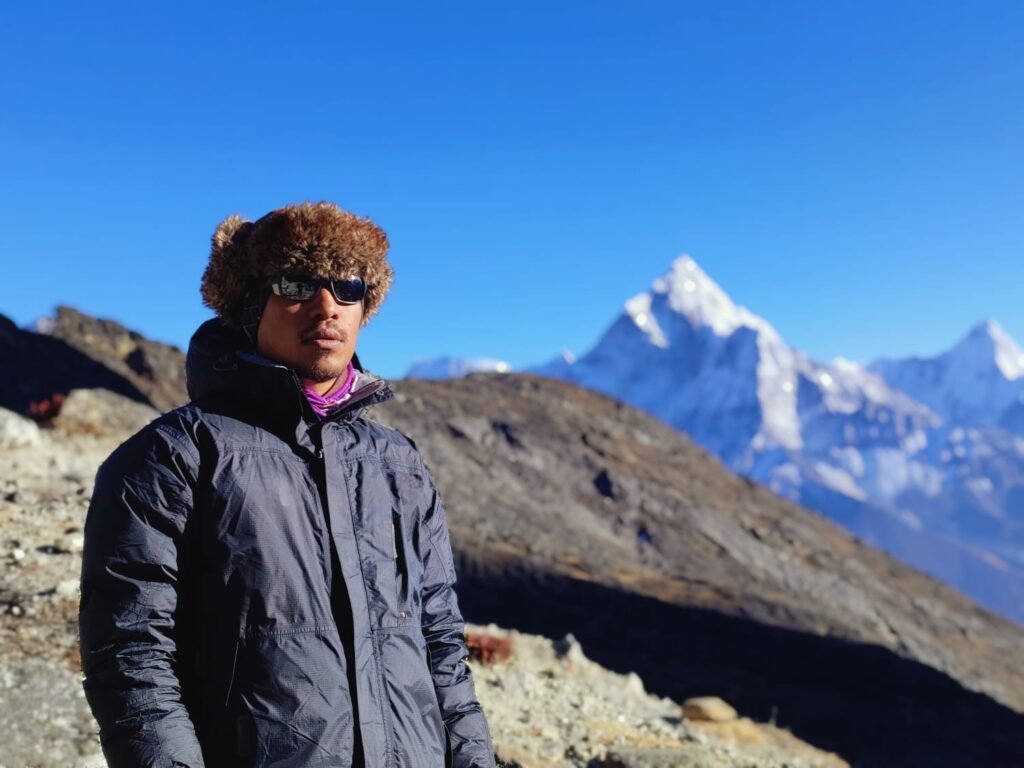
Everest trades variety for intensity. The Khumbu is relentlessly, gloriously mountainous: pine and rhododendron give way to alpine scrub, then to the stark, glaciated world of the high valleys. The views of Ama Dablam are, for many, the most beautiful in the Himalaya, and the summit of Everest itself, glimpsed from Kala Patthar or Base Camp, is an emotional event. But the vegetation is more uniform and the cultural landscape more singularly Sherpa. If your heart wants one perfect mountain, Everest; if it wants a whole changing world, Annapurna.
Culture and People: Gurung, Thakali, Magar vs Sherpa
Annapurna is a cultural mosaic. The lower hills are Gurung and Magar farmland, with slate-roofed villages, Gurkha heritage and the cheerful rhythm of dal bhat and millet beer. Higher up, the Thakali of the Kali Gandaki run the excellent lodges of Marpha and Tukuche and manage the sacred site of Muktinath, revered by both Hindus and Buddhists. The circuit even brushes the edge of Mustang, where Tibetan Buddhist culture runs deep. Our guides to [Gurung and Magar villages](https://annapurnacircuittreks.com/gurung-magar-villages-annapurna/) and [Thakali culture](https://annapurnacircuittreks.com/thakali-culture-kali-gandaki/) capture this variety.
Everest is Sherpa country, and the Buddhist, mountaineering-infused culture is world-famous: the monasteries of Tengboche and Pangboche, the mani walls, the prayer flags, the stories of Everest expeditions past. Both regions are rich, but Annapurna lets you move through several distinct peoples in a single walk, while Everest immerses you in one. For travellers who want to understand how tourism supports mountain communities, our piece on [how trekking supports local communities](https://annapurnacircuittreks.com/annapurna-trek-supports-local-communities/) applies across the Annapurnas.
Permits and Paperwork
Paperwork is similar in spirit but different in detail. Annapurna requires two permits: the ACAP (Annapurna Conservation Area Project) entry and the TIMS card. Both are arranged easily in Pokhara, and our [Annapurna trekking permits 2026](https://annapurnacircuittreks.com/annapurna-trekking-permits-2026/) guide lists current fees and where to get them. Restricted areas such as Upper Mustang and Nar-Phu need a special RAP permit and a licensed guide, but the standard circuit and base camp do not.
Everest needs the Sagarmatha National Park entry and the Khumbu Pasang Lhamu Rural Municipality permit, replacing the old TIMS for that area. Neither region requires a guide for the standard routes as of recent rules, though both are far safer and richer with one — see our [guide to whether you need a guide in 2026](https://annapurnacircuittreks.com/do-you-need-a-guide-annapurna-2026/). The practical difference is that Pokhara-based operators like ours handle Annapurna permits in an afternoon, while Everest permits are usually sorted in Kathmandu before the Lukla flight.
Cost: What You Will Actually Spend
Costs are broadly comparable but tilt in Annapurna’s favour for budget travellers. On either trek your biggest variables are whether you go independent or guided, and your appetite for comfort. Annapurna’s teahouse network is vast and competitive, so a simple guided circuit or base camp trip can be done for a modest daily rate, and our [Annapurna trek cost 2026](https://annapurnacircuittreks.com/annapurna-circuit-trek-cost-2026/) and [budget breakdown](https://annapurnacircuittreks.com/annapurna-circuit-trek-cost-2026/) break it down. The [Annapurna Circuit trek cost 2026](https://annapurnacircuittreks.com/annapurna-circuit-trek-cost-2026/) is its own animal because road access has shortened it.
Everest costs more in two ways: the Lukla flight is a significant fixed expense (and you pay it round trip), and the longer duration means more lodge nights and more food. Internal flights within the Khumbu, if you use them, add further cost. Neither region should be attempted without [travel insurance](https://annapurnacircuittreks.com/trekking-emergency-annapurna-what-to-do/) that covers helicopter evacuation, which is pricier for the more remote Everest stretches. For a transparent, Pokhara-based quote on Annapurna, [talk to our local experts](https://annapurnacircuittreks.com/contact-us/).
Crowds and Solitude
Both regions are popular, but the experience of crowding differs. Everest Base Camp is a well-worn highway in peak autumn and spring; the teahouses of Namche and Gorak Shep fill, and the trail can feel like a procession. Annapurna’s spread-out options mean you can dodge crowds more easily — choose [Khopra](https://annapurnacircuittreks.com/khopra-ridge-trek-guide/) or [Mardi Himal](https://annapurnacircuittreks.com/mardi-himal-trek-guide/) over the busy Poon Hill and Sanctuary routes, and you will often have ridges to yourself.
That said, Poon Hill at sunrise is as busy as any spot in Nepal, and the lower Circuit road has brought trekkers and jeeps together in ways the old walking route never saw. Our [guide to the best seasons](https://annapurnacircuittreks.com/best-time-to-trek-annapurna/) and the [month-by-month breakdown](https://annapurnacircuittreks.com/best-time-trek-annapurna-month-by-month/) help you time for fewer people. If true solitude is the goal, Annapurna’s side trails win; if you want to share the buzz of a famous pilgrimage, Everest delivers that camaraderie.
Side Adventures: Paragliding, Lakes and Shorter Wins
Annapurna’s Pokhara base opens doors Everest cannot. From Pokhara you can paraglide off Sarangkot with the Annapurnas behind you, take a [helicopter tour](https://annapurnacircuittreks.com/helicopter-tours-annapurna-massif/) for a dawn massif fly-by, or add a [day hike](https://annapurnacircuittreks.com/best-day-hikes-around-pokhara/) around the lake. The region also supports [luxury short treks](https://annapurnacircuittreks.com/annapurna-luxury-short-trek/) and [wellness escapes](https://annapurnacircuittreks.com/yoga-retreats-pokhara-annapurna/) that pair trekking with recovery. That flexibility is a big part of why the Annapurna area is [Nepal’s most popular trekking region](https://annapurnacircuittreks.com/nepals-most-popular-trekking-area/).
Everest offers fewer add-ons; it is a destination you commit to. You can helicopter in and out, and there is the buzz of Namche’s bakeries and gear shops, but the region is built around the one walk. If you like the idea of mixing a short trek with [paragliding](https://annapurnacircuittreks.com/paragliding-pokhara-annapurna/), a [cultural heritage tour](https://annapurnacircuittreks.com/annapurna-cultural-heritage-tour/) or a [village homestay](https://annapurnacircuittreks.com/village-homestay/), Annapurna keeps your options open right up to departure day.
Which Should You Choose?
Choose Annapurna if you want maximum variety for your time, easier logistics from green, low Pokhara, the freedom to pick a trek length that fits your calendar, richer cultural mixing, and the option to bolt on adventures like paragliding or a yoga retreat. Choose it if you are a first-timer who wants a gentle, scenic introduction, a family with kids, or someone who likes to keep plans flexible. Our [Annapurna Circuit vs Annapurna Base Camp](https://annapurnacircuittreks.com/annapurna-circuit-vs-annapurna-base-camp-which-trek-is-right-for-you/) comparison helps narrow the Annapurna choice once you are here.
Choose Everest if one mountain is your lifelong goal, if you want the camaraderie and history of the Khumbu, and if you have the two weeks the approach demands. Choose it if you are comfortable with the Lukla flight and the more singular cultural experience. Neither is a mistake. Both will change you. The only real error is deciding on a rumour rather than on the facts — which is exactly what this guide is here to give you.
How We Help You Decide and Go
At Annapurna Circuit Treks we are Pokhara-based and Annapurna-specialist, which means we can build, permit, guide and support almost any Annapurna plan with local knowledge earned on these trails year after year. If your heart is set on Everest we will tell you honestly and point you to a Khumbu specialist; if Annapurna fits — and for most travellers it does — we will shape the exact trek, length and comfort level around you. Our [complete Nepal trek guide for 2026](https://annapurnacircuittreks.com/nepal-trek-2026-complete-guide/) is a good next read, and our [booking guide](https://annapurnacircuittreks.com/hiring-local-guides-why-it-matters/) explains how to choose the right operator.
Difficulty and Fitness Demands
Neither region is a stroll, but the fitness profile differs. Annapurna’s Circuit is long and includes the Thorong La pass, a serious day, yet the gradual build lets most reasonably fit people succeed with training and pacing. The Base Camp trek is shorter and steadier, a strong hill-walk rather than a mountaineering feat. The short ridge treks — Poon Hill, Mardi, Khopra — are within reach of almost anyone who can walk uphill for a few hours. Our [beginner’s guide to the Circuit](https://annapurnacircuittreks.com/can-beginners-trek-annapurna-circuit/) is honest about the work involved.
Everest Base Camp is a sustained effort: long days, big altitude, and the famous stone steps up and down the Khumbu. It demands more cardiovascular base and more mental tolerance for repetitive climbing. Both regions reward training beforehand — hill walking, stairs, and pack-carrying in the months before — and both are achievable for ordinary fit people, not just athletes. The difference is that Annapurna lets you pick an easier objective if your fitness is uncertain, while Everest is one demanding shape whatever you do.
Food on the Trail
Food is a quiet highlight of both regions and a point of real similarity. Teahouses serve the endlessly refillable dal bhat — rice, lentil soup and vegetable or meat curry — plus noodles, fried rice, momos, pancakes and the famous apple pie of the higher lodges. Annapurna adds regional specialities: the Thakali set meal of the Kali Gandaki is a balanced feast of grains, greens and pickle, and Marpha’s apple products (juice, brandy, dried rings) are a trekking treat. Our [guide to traditional food](https://annapurnacircuittreks.com/traditional-food-annapurna-villages/) maps the local plate.
Everest’s lodges lean on the same international-teahouse menu, with Sherpa stews and Tibetan breads adding local colour. In both places eating the local dal bhat is the smartest choice: it is fresh, cheap, energising and low-impact. Our [food safety and stomach guide](https://annapurnacircuittreks.com/food-safety-stomach-annapurna/) covers how to eat well without getting sick, and it applies to any Nepali trail. The practical upshot: you will eat better and cheaper on Annapurna’s competitive circuit than almost anywhere else in the mountains.
Staying Connected: Wifi and Signal
Connectivity matters more than it used to, and here the regions differ by infrastructure. Annapurna’s lower and central trails pass through villages with decent 3G/4G and many lodges now offer wifi, though it thins out above 3,500 metres and vanishes on the high passes. The road-linked sections stay surprisingly connected. Our [wifi and connectivity guide](https://annapurnacircuittreks.com/annapurna-trekking-guides-packages/) sets realistic expectations so you are not surprised by a blackout at Thorong Phedi.
Everest has invested heavily in connectivity, including the famous free wifi at some Khumbu lodges and 3G/4G higher than you might expect, yet the deep valleys and the final push to Base Camp still lose signal. Neither region lets you rely on being online, and that is part of the gift. For safety rather than social media, a local SIM, a power bank, and knowing the [emergency procedures](https://annapurnacircuittreks.com/trekking-emergency-annapurna-what-to-do/) matter far more than streaming. Travel with the expectation of disconnection and you will enjoy both ranges more.
Photography: Two Different Moods
Photographers face a choice of mood. Annapurna offers enormous variety — the deep gorge of the Kali Gandaki between Dhaulagiri and Annapurna I, the amphitheatre of the Base Camp sanctuary, the terraced hills of the lower route, and sunrise from Poon Hill with both giants in frame. Our [guide to photographing Dhaulagiri and Annapurna I](https://annapurnacircuittreks.com/photographing-dhaulagiri-annapurna-i/) explains the iconic compositions, and our [best sunrise viewpoints](https://annapurnacircuittreks.com/best-sunrise-viewpoints-annapurna/) list the ridgelines worth the alarm clock.
Everest is about one subject from a thousand angles: the perfect pyramid of Ama Dablam, the glowing wall of Nuptse, the tooth of Lhotse, and Everest itself from Kala Patthar. The Khumbu’s glaciated blues and the colourful prayer-flag passes make for unforgettable frames. Both regions reward a tripod and patience; both punish midday flat light. If you want a photographic smorgasbord, Annapurna; if you want to obsess over a single perfect peak, Everest. Either way, our [ethical village photography guide](https://annapurnacircuittreks.com/ethical-village-photography-annapurna/) applies to how you shoot the people you meet.
Families, Kids and Older Travellers
Annapurna is the more family-friendly region by a wide margin. Low foothill walks like the [Ghandruk loop](https://annapurnacircuittreks.com/8-days-ghandruk-loop-trek-child-friendly-family-itinerary/) and the Australian Camp–Dhampus stroll are genuinely doable with children, and even Base Camp is completed by fit families with older kids. Our [Annapurna with kids guide](https://annapurnacircuittreks.com/annapurna-with-kids-family-trek/) and [senior-friendly treks](https://annapurnacircuittreks.com/senior-friendly-annapurna-treks/) lay out the realistic options, and Pokhara’s comforts make a base-camp recovery easy.
Everest is harder with children and older trekkers because of the flight, the altitude and the relentless duration; it is possible but demands more caution and fitness. Both regions are fine for solo travellers with the usual commonsense, and our [solo trekking safety guide](https://annapurnacircuittreks.com/solo-trekking-annapurna-safety/) covers the Annapurna side. The headline: if your group spans ages and abilities, Annapurna’s flexible lengths and gentle options make it the natural choice, while Everest suits a tighter, fitter, more single-minded party.
Emergencies and Evacuation
Safety infrastructure is mature in both regions but works differently. Annapurna has [Himalayan Rescue Association clinics](https://annapurnacircuittreks.com/hra-clinics-annapurna-route/) at Manang and (just outside the core, at Pheriche) for altitude assessment, and the lower road means a jeep evacuation from many points is faster than in the Khumbu. Helicopters serve both ranges, and [travel insurance covering evacuation](https://annapurnacircuittreks.com/trekking-emergency-annapurna-what-to-do/) is essential everywhere. Our [emergency what-to-do guide](https://annapurnacircuittreks.com/trekking-emergency-annapurna-what-to-do/) is worth reading before you fly.
Everest’s evacuation relies heavily on helicopter from Lukla inward, and weather can ground flights for days, which is why insurance and a buffer in your schedule matter so much there. Annapurna’s road network is a genuine safety advantage for the lower and mid routes. Whichever you choose, trek with a guide who carries a comms device and a plan, and never treat altitude symptoms as mere tiredness. Both ranges are safe when respected and dangerous when rushed.
Environmental Footprint
Both regions sit inside protected areas and both face the pressure of thousands of boots. Annapurna’s ACAP funds conservation through permit fees and has pushed hard on plastic reduction; our [guide to cutting plastic on the trail](https://annapurnacircuittreks.com/reducing-plastic-annapurna-trail/) and [offsetting your footprint](https://annapurnacircuittreks.com/offsetting-trek-footprint-nepal/) explain the practical steps. The Circuit’s road expansion is a double-edged sword: easier access but more dust and diesel, which is why many now combine driving the low road with walking the high sections.
Everest has its own challenges, notably the litter legacy of past expeditions and the weight of aviation emissions from the Lukla flights. Choosing a responsible operator, carrying out your waste, and supporting community lodges are the universal answers. At Annapurna Circuit Treks we build low-impact habits into every trip, from reusable bottles to local-spend itineraries, because the Annapurnas we love only survive if the people who walk them tread lightly. The region is [a conservation area for a reason](https://annapurnacircuittreks.com/is-annapurna-conservation-area/).
A Quick Decision Checklist
If you want a fast, practical tie-breaker, run down this list. Pick Annapurna if: you have under two weeks; you prefer easy logistics from Pokhara; you want to choose your trek length; you love cultural variety; you are travelling with kids or older relatives; you want to add paragliding, yoga or a lake stay; or you are a first-time trekker who values a gentle build-up. Pick Everest if: one mountain is your lifelong goal; you have a full two weeks; you are comfortable with the Lukla flight; you want Sherpa Buddhist culture specifically; or you crave the camaraderie of a famous pilgrimage.
Most of our enquiries land on Annapurna, simply because it fits more lives. But we would rather you go to the right range than the famous one, and we will say so plainly. Once Annapurna is your answer, the next question is Circuit or Base Camp — our [head-to-head comparison](https://annapurnacircuittreks.com/annapurna-circuit-vs-annapurna-base-camp-which-trek-is-right-for-you/) settles that, and our [Annapurna Circuit vs Manaslu](https://annapurnacircuittreks.com/annapurna-circuit-vs-manaslu/) piece opens a third, quieter door if you want still more solitude. Either way, the decision starts here, with honest facts, not brochure hype.
Is Annapurna or Everest better for first-time trekkers?
Annapurna is generally the easier first step. You start lower and greener from Pokhara, choose your distance, and ease into altitude gradually, whereas Everest begins with a steep mountain flight and a faster climb. Both are achievable for fit beginners with the right pacing and a guide.
Which region is cheaper?
Annapurna tends to be cheaper because there is no mandatory Lukla flight and the teahouse competition keeps daily costs down. Everest adds round-trip airfare and more lodge nights. Either way, guided comfort and insurance are the biggest cost drivers.
Can I see Everest from Annapurna?
No. The ranges are far apart and separated by other peaks. From Annapurna you photograph Dhaulagiri and Annapurna I; Everest is a separate trip. Our guide to [photographing Dhaulagiri and Annapurna I](https://annapurnacircuittreks.com/photographing-dhaulagiri-annapurna-i/) covers the local giants.
Which has better sunrise viewpoints?
Both are superb. Annapurna’s Poon Hill and the high camps of Mardi and Khopra are famous for dawn light on Dhaulagiri and the Annapurnas, while Everest’s Kala Patthar is the classic Everest sunrise. See our [best sunrise viewpoints](https://annapurnacircuittreks.com/best-sunrise-viewpoints-annapurna/) for the Annapurna side.
Do I need a guide in either region?
As of recent rules, standard routes in both do not legally require a guide, but a licensed local guide dramatically improves safety, culture and logistics. Our [2026 guide guide](https://annapurnacircuittreks.com/do-you-need-a-guide-annapurna-2026/) explains the trade-offs in detail.
Plan Your Annapurna Adventure
The Annapurna region rewards preparation. Annapurna Circuit Treks runs fixed-departure and fully custom Annapurna treks from our Pokhara base — licensed guides, community lodges, and transparent 2026 pricing. Browse our [Annapurna trekking guides & packages](https://annapurnacircuittreks.com/annapurna-trekking-guides-packages/) or talk to a [local expert](https://annapurnacircuittreks.com/contact-us/) before you fly.
*— Annapurna Circuit Treks, Pokhara*