
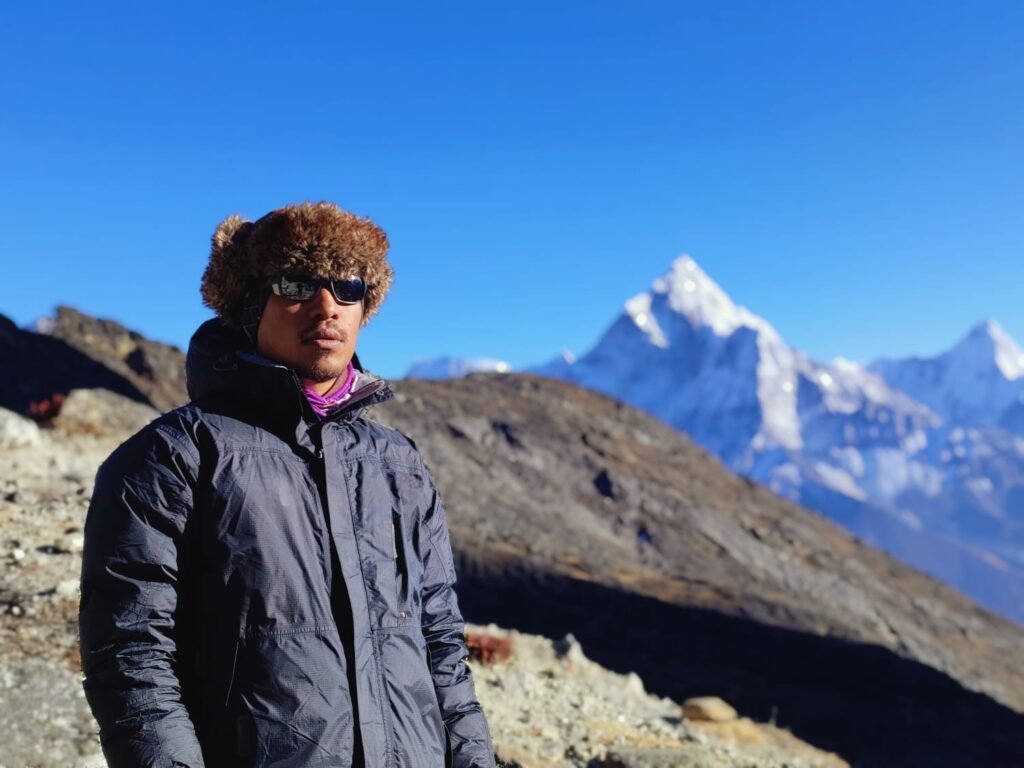


# Mountain Biking the Annapurna Circuit Road – The Ultimate High-Altitude Ride
Why the Annapurna Circuit Road Is a World-Class Ride
When the jeep road finally linked the Marsyangdi and Kali Gandaki valleys, walkers lamented the loss of wilderness – but riders gained one of the most spectacular mountain-bike traverses on Earth. The Annapurna Circuit road climbs from subtropical rice terraces near Besisahar to the 5,416 m Thorong La and plunges into the arid gorge above Muktinath, threading Gurung villages, Tibetan plateau, and six 7,000 m-plus peaks along the way. Few rides on the planet pack that much altitude, culture, and scenery into a single week.
Annapurna Circuit Treks runs supported bike trips on this corridor from our Pokhara base, with vehicles carrying your luggage, a mechanic, and a guide who knows every washout and checkpoint. Our [dedicated mountain-biking the Circuit road guide](https://annapurnacircuittreks.com/mountain-biking-annapurna-circuit-road/) is below, and it pairs with the [Manang and Mustang Circuit guide](https://annapurnacircuittreks.com/manang-mustang-annapurna-circuit-trek-nepal/) for the geography. If you would rather not pedal the whole thing, the [4×4 drive to Manang and Tilicho](https://annapurnacircuittreks.com/trip/7-days-4×4-drive-manang-tilicho/) covers the same road by motor, and the [road cycling activity](https://annapurnacircuittreks.com/activities/road-cycling/) is how to book a ride with us.
The Route at a Glance – Numbers and Profiles
The classic bike traverse runs roughly 160-200 km depending on where you start and whether you include the Tilicho or Mesokanto variations. The defining figures are the altitude: you begin around 760 m at Besisahar and top out at 5,416 m on Thorong La – a vertical gain of over 4,600 m. The climb is long and broken (you can drive to Manang now, shortening the approach), and the descent to Muktinath drops about 1,600 m in a single, legendary run.
Average daily climbing on a full traverse is 800-1,200 m, with the Thorong day being the outlier at over 1,600 m of gain to the pass. The [geography guide](https://annapurnacircuittreks.com/things-to-do-in-annapurna-region/) explains how the road follows the river valleys and the rain-shadow physics; the [how to reach the region guide](https://annapurnacircuittreks.com/annapurna-travel-guide-2026/) covers the drive from Pokhara to the start. Because the road is now motorable to Manang, many riders shuttle the lower, hotter, dustier section and begin pedalling at Chame or Manang for a purer high-mountain ride.
Bike Choice – Hardtail, Full-Suspension, or E-Bike
The Circuit road is mostly rough gravel, stone paving, and seasonal mud, with some paved sections near the villages. A hardtail mountain bike with 29-inch wheels and decent tyres is the traditional choice and tough enough for the terrain; a full-suspension bike is more comfortable on the long, washboard descents but heavier to push if you must walk a section. Increasingly, e-bikes are used to tame the altitude – pedal-assist helps on the climbs where thin air saps your legs.
Whatever you ride, tubeless tyres with sealant are wise against thorns and sharp stone, and a clutch derailleur saves the chain on rough sections. The [Pokhara gear-rental guide](https://annapurnacircuittreks.com/annapurna-trekking-guides-packages/) lists what we can supply or help you source, and the [trekking packing list](https://annapurnacircuittreks.com/annapurna-trekking-guides-packages/) covers the clothing that doubles for riding and lodges. Our supported trips carry a spare bike and a full tool kit, so a mechanical rarely ends a day – the [operator-choice guide](https://annapurnacircuittreks.com/hiring-local-guides-why-it-matters/) explains what a rooted operator provides.
The Climb – Besisahar to Manang
The lower road from Besisahar follows the Marsyangdi river through a deep, green gorge, crossing and re-crossing the water on concrete bridges, past Gurung and Tamang villages with terraced fields stacked to the sky. It is hot, humid, and dusty in autumn, and the climbing is relentless but gradual. Most riders now skip this section by vehicle and start at Chame (around 2,670 m) or Bhraka, where the air cools and the peaks appear.
From Chame the road climbs through pine and then apple-orchard country to Manang at 3,540 m, with the Annapurna II and IV walls closing in. This is the stretch where altitude first bites – you will be out of the saddle and walking the bike on the steepest pitches. The [Manang and Mustang guide](https://annapurnacircuittreks.com/manang-mustang-annapurna-circuit-trek-nepal/) covers the villages; the [Gurung villages guide](https://annapurnacircuittreks.com/gurung-magar-villages-annapurna/) the culture of the lower stretch; and the [acclimatisation guide](https://annapurnacircuittreks.com/acclimatisation-strategy-tilicho-thorong/) explains why riders, like walkers, must rest at Manang before the pass. The [food guide](https://annapurnacircuittreks.com/traditional-food-annapurna-villages/) maps the roadside thukpa and momos.
Acclimatisation for Riders – Same Rules, Faster Pace
Because a bike covers ground faster than feet, riders are tempted to gain altitude quicker than is safe – and altitude sickness does not care how you travelled. The rule is identical to walking: build in rest days, especially at Manang (3,540 m), and never sleep more than about 500 m higher than the night before above 3,000 m. Riders who blow through Manang to Thorong Phedi in one push are the ones who get ill.
Our bike trips mirror the walking acclimatisation block: two nights at Manang with a spin up toward Ice Lake or Tilicho Base Camp. The [Ice Lake hike](https://annapurnacircuittreks.com/ice-lake-manang-acclimatization-hike/) and the [Tilicho route](https://annapurnacircuittreks.com/annapurna-circuit-with-tilicho-lake-trek/) double as rider rest-day explores. The [altitude guide](https://annapurnacircuittreks.com/altitude-sickness-annapurna-circuit/) and the [HRA clinics guide](https://annapurnacircuittreks.com/hra-clinics-annapurna-route/) are required reading; the [safety guide](https://annapurnacircuittreks.com/annapurna-trek-safety-altitude/) frames the turn-around rule. The [insurance guide](https://annapurnacircuittreks.com/trekking-emergency-annapurna-what-to-do/) must include evacuation cover – a rider with AMS at 4,500 m needs the same helicopter as a walker.
The Thorong La Crossing by Bike
Thorong La is the crown of the ride. From Thorong Phedi (around 4,500 m) or High Camp (around 4,600-4,900 m) you pedal – and mostly push – the final metres to the 5,416 m pass, a wide, prayer-flag-draped saddle with a small teahouse and a view that spans the entire massif. The air is thin to the point of absurdity; many riders walk the last steep pitch beside the bike.
The descent is the reward: a long, sweeping drop of roughly 1,600 m toward Muktinath on a mix of paved and gravel road, where you can open up and let the Himalaya rush past. It is one of the great mountain descents on the planet. The [Manang and Mustang guide](https://annapurnacircuittreks.com/manang-mustang-annapurna-circuit-trek-nepal/) places the crossing in the wider circuit, and the [two-week Circuit day-by-day guide](https://annapurnacircuittreks.com/two-week-annapurna-circuit-day-by-day/) gives the walking equivalent for context. Weather is the decider – the [weather-by-altitude guide](https://annapurnacircuittreks.com/annapurna-weather-by-altitude/) shows how fast a pass can turn; we cross early, before afternoon wind.
The Descent to Muktinath and the Kali Gandaki
Below Thorong La the road enters the Kali Gandaki gorge, the deepest in the world relative to the surrounding peaks, and rolls through the sacred site of Muktinath at 3,800 m and the windswept villages of Jharkot and Kagbeni. The riding here is fast and flowing on good sections, technical on the washed-out ones, with the Dhaulagiri and Nilgiri walls towering on the far side of the gorge.
Kagbeni is the gate to Upper Mustang (restricted – see the [Manang and Mustang guide](https://annapurnacircuittreks.com/manang-mustang-annapurna-circuit-trek-nepal/) and the [permits guide](https://annapurnacircuittreks.com/annapurna-trekking-permits-2026/)), and a natural lunch stop. From there the road continues down to Jomsom (2,740 m), Marpha with its apple orchards, and eventually Tatopani and Beni, where the high country finally relents into green hills. The [Thakali culture guide](https://annapurnacircuittreks.com/thakali-culture-kali-gandaki/) explains the people of this corridor, and the [Muktinath guide](https://annapurnacircuittreks.com/muktinath-temple-sacred-site/) the sacred stop.
Road Conditions, Dust, and Washouts
Honest talk: the Circuit road is rough. In dry season it is fast gravel and dust that coats everything; in monsoon it is mud, landslides, and washouts that can block a section for hours or days. The paving is patchy – some villages have tarmac, most connecting stretches are loose stone. Riders need skill on loose surfaces and a tolerance for dust in the face of oncoming jeeps.
Our supported trips scout conditions daily and reroute around closures; the [monsoon guide](https://annapurnacircuittreks.com/monsoon-in-annapurna-quiet-trails/) explains why we avoid the deep-summer window for riding, while the [autumn guide](https://annapurnacircuittreks.com/autumn-in-annapurna-peak-season/) and [spring guide](https://annapurnacircuittreks.com/spring-in-annapurna-rhododendrons/) are the dry, rideable seasons. The [best-time guide](https://annapurnacircuittreks.com/best-time-to-trek-annapurna/) and [month-by-month planner](https://annapurnacircuittreks.com/best-time-trek-annapurna-month-by-month/) help you choose. A buff or mask for dust, clear glasses, and a rear-facing awareness of traffic are non-negotiable – the [safety guide](https://annapurnacircuittreks.com/annapurna-trek-safety-altitude/) covers road-sharing with jeeps.
Best Season to Ride
Autumn (October-November) is the standout: dry roads, stable weather, clear peaks, and the pass usually snow-free early in the season. Spring (March-May) is the second choice, with warming weather and rhododendrons lower down, though late-spring snow can still touch Thorong La. Winter closes the pass with deep snow and is for experts only; monsoon makes the road a mudfest and risks landslides.
The [best-time overview](https://annapurnacircuittreks.com/best-time-to-trek-annapurna/), the [autumn guide](https://annapurnacircuittreks.com/autumn-in-annapurna-peak-season/), and the [spring guide](https://annapurnacircuittreks.com/spring-in-annapurna-rhododendrons/) cover the windows in detail; the [weather-by-altitude guide](https://annapurnacircuittreks.com/annapurna-weather-by-altitude/) shows how the high pass cools after dark. We schedule the Thorong crossing for a clear, calm morning and build buffer days so a weather hold does not sink the trip. The [Annapurna versus Manaslu guide](https://annapurnacircuittreks.com/annapurna-circuit-vs-manaslu/) notes that the neighbour also has a rideable road if you want a quieter alternative.
Gear and What to Pack on the Bike
Beyond the bike, the rider needs: a quality helmet (mandatory), gloves, eye protection, a windproof shell, warm layers for the pass (it is bitter above 4,500 m even in autumn), a hydration pack, a basic tool roll, spare tubes or a tubeless repair kit, and a small first-aid kit. Luggage travels in the support vehicle, so you ride with a daypack only.
The [trekking packing list](https://annapurnacircuittreks.com/annapurna-trekking-guides-packages/) covers the clothing principles, the [Pokhara gear-rental guide](https://annapurnacircuittreks.com/annapurna-trekking-guides-packages/) what we can supply, and the [pre-departure checklist](https://annapurnacircuittreks.com/annapurna-trekking-permits-2026/) a last-minute reminder. The [water and hygiene guide](https://annapurnacircuittreks.com/drinking-water-hygiene-annapurna/) matters because you sweat hard at altitude and must treat or boil refill water – the [plastic-reduction guide](https://annapurnacircuittreks.com/reducing-plastic-annapurna-trail/) keeps the trail clean. Sundown comes fast and cold up high, so lights and a warm layer ride with you even on a short day.
Support Vehicles, Mechanics, and Logistics
A supported bike trip is the sane way to do this road. A vehicle carries your duffel, food, and a spare bike; a mechanic rides or follows; a guide leads and manages permits and lodges. This turns a logistics nightmare – where do you sleep, who carries the tent, what if the bike breaks at 4,000 m – into a pure riding experience.
Annapurna Circuit Treks runs exactly this model from Pokhara, and our [operator-choice guide](https://annapurnacircuittreks.com/hiring-local-guides-why-it-matters/) explains the difference between a rooted local operator and a faceless listing. The [guide requirement guide](https://annapurnacircuittreks.com/do-you-need-a-guide-annapurna-2026/) notes that a licensed leader is required on the protected route; the [why local guides matter](https://annapurnacircuittreks.com/hiring-local-guides-why-it-matters/) makes the deeper case. The [hassle-free trekking guide](https://annapurnacircuittreks.com/effortless-adventure-hassle-free-annapurna-trekking-with-local-experts-in-nepal/) describes how we handle the boring parts so you ride the fun parts.
Permits for the Ride
Bikers need the same ACAP permit and TIMS card as walkers, checked at the conservation-area entrances and the Manang and Mustang posts. If you continue into Upper Mustang beyond Kagbeni you need the Restricted Area Permit and a licensed guide. Annapurna Circuit Treks arranges all permits as part of the booking.
The [2026 permits guide](https://annapurnacircuittreks.com/annapurna-trekking-permits-2026/) has current prices and documents (passport, photos, cash), and the [Manang and Mustang guide](https://annapurnacircuittreks.com/manang-mustang-annapurna-circuit-trek-nepal/) covers the Mustang extension. The [insurance guide](https://annapurnacircuittreks.com/trekking-emergency-annapurna-what-to-do/) is critical: your policy must cover mountain biking and helicopter evacuation, because a crash or AMS at altitude is a serious, costly event. We verify cover before you pedal a metre.
Training and Fitness for the Ride
You do not need to be a racer, but you do need to be comfortable on loose, steep gravel and fit enough for multi-hour climbs at altitude. Riders who can spin up a 1,000 m road climb at home, then add thin air, will cope; couch-to-Circuit is a bad idea. We recommend a few months of weekend riding with some loaded climbs, plus cardio to build altitude tolerance.
The [can beginners trek the Circuit guide](https://annapurnacircuittreks.com/can-beginners-trek-annapurna-circuit/) reassures walkers, and the same logic applies to riders – start modest. The [senior-friendly treks guide](https://annapurnacircuittreks.com/senior-friendly-annapurna-treks/) shows how older riders can use e-bikes and a paced plan; the [family trek guide](https://annapurnacircuittreks.com/annapurna-with-kids-family-trek/) covers how to include teens on the lower, easier sections. Our [Lakeside wellness base](https://annapurnacircuittreks.com/lakeside-pokhara-wellness-base/) in Pokhara is where we often pre-condition guests with a few spins around the valley.
Combining Biking with Trekking or 4×4
Many guests mix modes: bike the high limb, then walk a side valley like the [Ice Lake hike](https://annapurnacircuittreks.com/ice-lake-manang-acclimatization-hike/) or [Tilicho route](https://annapurnacircuittreks.com/annapurna-circuit-with-tilicho-lake-trek/), or swap the bike for a [4×4 drive](https://annapurnacircuittreks.com/trip/7-days-4×4-drive-manang-tilicho/) on a rest day. Others ride down and then trek the Ghorepani-Poon Hill loop (see the [Poon Hill guide](https://annapurnacircuittreks.com/ghorepani-poon-hill-trek-guide/)) for a greener, lower contrast. The region is flexible enough to build a hybrid trip.
The [things to do in Annapurna](https://annapurnacircuittreks.com/things-to-do-in-annapurna-region/) page lists the menu, and the [adventure-lover guide](https://annapurnacircuittreks.com/annapurna-trek-trip-for-adventure-lover/) maps how to stack objectives. The [Circuit versus Base Camp guide](https://annapurnacircuittreks.com/annapurna-circuit-vs-annapurna-base-camp-which-trek-is-right-for-you/) helps you decide whether to pair the ride with a walk to ABC. Annapurna Circuit Treks designs these hybrids from Pokhara – tell us your fitness and appetite and we reverse-engineer the route.
Safety, Traffic, and Evacuation
Sharing a rough road with jeeps, buses, and yaks is the main riding hazard – visibility is poor in dust, and a blind corner can surprise you. Ride defensively, use a mirror, and never outride your sightline. Altitude remains the other hazard; the [safety and altitude guide](https://annapurnacircuittreks.com/annapurna-trek-safety-altitude/) and the [emergency guide](https://annapurnacircuittreks.com/trekking-emergency-annapurna-what-to-do/) are required reading, and the [HRA clinics guide](https://annapurnacircuittreks.com/hra-clinics-annapurna-route/) locates the Manang medical post.
Our trips carry a satellite phone and a written evacuation plan; the [is Annapurna safe guide](https://annapurnacircuittreks.com/is-annapurna-trek-safe-for-trekkers/) frames the culture of caution. The [insurance guide](https://annapurnacircuittreks.com/trekking-emergency-annapurna-what-to-do/) must name mountain biking and evacuation explicitly – a generic policy can refuse a claim. We check this before departure, because a breakdown in cover at 5,000 m is no time to discover the fine print.
Photography from the Saddle
The ride hands you moving compositions: a switchback with Annapurna IV behind, a prayer-flag arch at a village, the Kali Gandaki gorge opening below. Shoot at stops, never on the move on loose ground – a dropped phone at 30 km/h is gone, and a glance away on a washboard section means a crash. The [Dhaulagiri photography guide](https://annapurnacircuittreks.com/photographing-dhaulagiri-annapurna-i/) covers the big peaks; the [ethical photography guide](https://annapurnacircuittreks.com/ethical-village-photography-annapurna/) keeps your lens respectful in villages.
Because the air is dry and clear, the high corridor is also superb for [astrophotography](https://annapurnacircuittreks.com/night-sky-milky-way-annapurna/) on a rest night at Manang or Muktinath – bring a camera if you plan a second creative aim. The [drone rules guide](https://annapurnacircuittreks.com/drone-rules-annapurna-photography/) warns that flying is restricted near many sites, so keep the drone packed and shoot from the bike instead. Our [photography activity](https://annapurnacircuittreks.com/activities/photography/) can add a focused day.
Responsible Riding in the Conservation Area
A bike’s tyre can scar a wet trail and its dust can foul a village, so ride gently: slow through settlements, stay on the formed road (no cutting switchbacks), and pack out your wrappers. The Annapurna Conservation Area runs on user fees and alternative energy, so supporting [local communities](https://annapurnacircuittreks.com/annapurna-trek-supports-local-communities/) by staying in their lodges and buying their food is the other half of responsible travel.
The [conservation area guide](https://annapurnacircuittreks.com/is-annapurna-conservation-area/) explains the ACAP model, the [plastic-reduction guide](https://annapurnacircuittreks.com/reducing-plastic-annapurna-trail/) the trail habits, and the [footprint-offset guide](https://annapurnacircuittreks.com/offsetting-trek-footprint-nepal/) how to balance the whole journey. Riding rather than driving yourself actually lowers the per-person footprint on the corridor – one guide-vehicle serves a whole group instead of several jeeps. The [teahouse etiquette guide](https://annapurnacircuittreks.com/most-photographed-teahouses-annapurna/) helps you be a good guest at the lodges each night.
Sample 7-Day Supported Ride Itinerary
Day 1: drive Pokhara to Chame (2,670 m), easy spin to acclimatise. Day 2: ride Chame to Manang (3,540 m), big mountain views. Day 3: rest day at Manang – spin to Ice Lake or Tilicho Base Camp. Day 4: ride to Thorong Phedi / High Camp. Day 5: dawn crossing of Thorong La (5,416 m), descend to Muktinath (3,800 m). Day 6: ride down the Kali Gandaki to Jomsom and Marpha. Day 7: final descent to Tatopani, drive back to Pokhara.
This is a template; we adjust for fitness, altitude, and weather. The [10-day plan](https://annapurnacircuittreks.com/10-day-annapurna-plan/) and [one-week itineraries](https://annapurnacircuittreks.com/one-week-annapurna-itineraries/) offer variants, and the [4×4 drive option](https://annapurnacircuittreks.com/trip/7-days-4×4-drive-manang-tilicho/) is the motorised version of the same corridor. The [two-week Circuit guide](https://annapurnacircuittreks.com/two-week-annapurna-circuit-day-by-day/) gives the full walking equivalent for context, and the [3-day Pokhara escape](https://annapurnacircuittreks.com/3-day-annapurna-escape-pokhara/) is the trimmed taste if a week is too much.
The Mesokanto La – The Expert Extension
For strong, well-acclimatised riders who have already done Tilicho, the Mesokanto La is the legendary alternative crossing: from Tilicho Base Camp you climb a rough, high pass around 5,100 m and drop into Upper Mustang, joining the Circuit near Jomsom. It is harder, higher, and more committing than Thorong La because there is no teahouse at the top and no road – just a walking/riding track that demands bike-pushing and nerve.
This variation is for experts only and requires the Upper Mustang Restricted Area Permit and a licensed guide. The [Manang and Mustang guide](https://annapurnacircuittreks.com/manang-mustang-annapurna-circuit-trek-nepal/) covers the Mustang side, the [permits guide](https://annapurnacircuittreks.com/annapurna-trekking-permits-2026/) the paperwork, and the [Tilicho route](https://annapurnacircuittreks.com/annapurna-circuit-with-tilicho-lake-trek/) the approach. Annapurna Circuit Treks runs it as a custom trip with full support – the [operator-choice guide](https://annapurnacircuittreks.com/hiring-local-guides-why-it-matters/) explains why a rooted operator is essential for such a remote line. The [Annapurna versus Manaslu guide](https://annapurnacircuittreks.com/annapurna-circuit-vs-manaslu/) notes Manaslu has a similar expert ride if you want options.
E-Bikes on the Circuit – Levelling the High Pass
The single biggest change in Himalaya riding over the last few years is the e-bike. Pedal-assist motors flatten the thin-air penalty: on the long grind to Manang or the final pitch to Thorong La, a modest assist lets an ordinary rider keep spinning where a fit rider would be walking. This has opened the Circuit road to older riders, heavier riders, and anyone short on training time, without removing the sense of achievement – you still cross the pass under your own effort, just assisted.
E-bikes need charging, so our supported trips plan lodge stops with power and carry spare batteries in the vehicle; the [Pokhara gear-rental guide](https://annapurnacircuittreks.com/annapurna-trekking-guides-packages/) lists what we supply. The [senior-friendly treks guide](https://annapurnacircuittreks.com/senior-friendly-annapurna-treks/) and [beginners guide](https://annapurnacircuittreks.com/can-beginners-trek-annapurna-circuit/) cover who benefits most, and the [safety guide](https://annapurnacircuittreks.com/annapurna-trek-safety-altitude/) the same altitude rules apply – assist does not prevent AMS. The [acclimatisation guide](https://annapurnacircuittreks.com/acclimatisation-strategy-tilicho-thorong/) still governs the plan. Annapurna Circuit Treks runs e-bike departures on the same northern limb, and the [4×4 drive option](https://annapurnacircuittreks.com/trip/7-days-4×4-drive-manang-tilicho/) remains for those who want no pedalling at all.
Riding Ethically – Yaks, Villages, and Right of Way
On a shared mountain road the bike is the fast, silent intruder, and courtesy is everything. Yield to yaks and dzomo (they spook and are invaluable to the village), slow to a crawl through every settlement, and never bomb past a line of trekkers on a narrow ledge. A bell or a polite call gives people and animals warning. The [teahouse etiquette guide](https://annapurnacircuittreks.com/most-photographed-teahouses-annapurna/) covers village manners; on a bike they start at the handlebars.
The [community page](https://annapurnacircuittreks.com/annapurna-trek-supports-local-communities/) explains why your behaviour shapes whether bikes are welcomed on the Circuit; a reckless rider poisons the well for everyone. The [plastic-reduction guide](https://annapurnacircuittreks.com/reducing-plastic-annapurna-trail/) and the [footprint-offset guide](https://annapurnacircuittreks.com/offsetting-trek-footprint-nepal/) cover the environmental side. Annapurna Circuit Treks briefs every rider on right-of-way before the first pedal stroke, because a respectful descent is a fast one – no one blocks the path of a considerate cyclist.
Bike Packing and Trailside Repairs
Self-sufficiency starts with what you carry on the frame. A minimal repair kit – multitool, chain quick-link, tyre levers, a spare tube or tubeless plugs, a mini-pump or CO2, and a length of zip tie – handles the common failures. On the Circuit the support vehicle carries the heavy spares, but a roadside puncture between jeeps is yours to fix, and the nearest bike shop is back in Pokhara or Kathmandu.
The [Pokhara gear-rental guide](https://annapurnacircuittreks.com/annapurna-trekking-guides-packages/) lists what we supply and what to bring; the [trekking packing list](https://annapurnacircuittreks.com/annapurna-trekking-guides-packages/) the clothing. Learn to seat a tubeless tyre with a floor pump before you leave – a skill that saves a walk. The [pre-departure checklist](https://annapurnacircuittreks.com/annapurna-trekking-permits-2026/) is the final check. Our guides carry a full workshop kit and a spare bike, so a major failure rarely ends a day, but the small stuff is your responsibility and pride.
Hydration, Nutrition, and Riding Thin Air
At altitude you dehydrate faster and burn more carbohydrate just to stay warm and breathe, so eating and drinking on the bike is not optional. Carry two litres and a treatment method (the [water guide](https://annapurnacircuittreks.com/drinking-water-hygiene-annapurna/) covers options), and eat little and often – a bar or a handful of nuts every hour beats a big lodge lunch followed by a bonk. The thin air also makes the same climb feel 30 percent harder than at home, so pace by breath, not by ego.
The [food guide](https://annapurnacircuittreks.com/traditional-food-annapurna-villages/) maps the roadside momos and thukpa; the [safety guide](https://annapurnacircuittreks.com/annapurna-trek-safety-altitude/) the altitude symptoms. The [acclimatisation guide](https://annapurnacircuittreks.com/acclimatisation-strategy-tilicho-thorong/) explains why a rested rider outperforms a fit-but-unacclimatised one on Thorong La. Annapurna Circuit Treks schedules fuel stops at lodges and carries extra water in the support vehicle, so you never start a big climb dry. The [insurance guide](https://annapurnacircuittreks.com/trekking-emergency-annapurna-what-to-do/) covers the medical side if thin air wins.
The Kali Gandaki Descent – Technique Tips
The long descent from Thorong La to Muktinath is the ride’s payoff, but a 1,600 m drop on loose gravel punishes poor technique. Keep your weight back and low, use both brakes gently rather than grabbing the front, and let the bike roll over the bumps rather than fighting them. On the paved sections you can open up; on the washboard gravel, ease off and read the surface two bike-lengths ahead.
The [weather-by-altitude guide](https://annapurnacircuittreks.com/annapurna-weather-by-altitude/) affects traction – a frosty early start means ice in the shade. The [safety guide](https://annapurnacircuittreks.com/annapurna-trek-safety-altitude/) covers road-sharing with jeeps coming up. The [best-time guide](https://annapurnacircuittreks.com/best-time-to-trek-annapurna/) picks the dry windows when the descent is fastest. Annapurna Circuit Treks leads the descent at a controlled pace and sweeps the tail, so no rider is left alone on the long, tempting drop. The [Thakali guide](https://annapurnacircuittreks.com/thakali-culture-kali-gandaki/) explains the villages you reach at the bottom.
Costs and What a Supported Trip Includes
As a rough 2026 guide, a supported bike trip on the Circuit runs from around USD 900-1,600 per person for a 7-10 day traverse depending on group size, the level of lodging, and whether e-bikes are used – typically including the support vehicle, mechanic, guide, permits handling, and most meals. Bike rental, if you do not bring your own, is extra and varies by bike quality. Treat these as typical rather than fixed quotes.
The [trek cost guide](https://annapurnacircuittreks.com/annapurna-circuit-trek-cost-2026/) and the [budget breakdown](https://annapurnacircuittreks.com/annapurna-circuit-trek-cost-2026/) give the wider context, and the [cash and ATM guide](https://annapurnacircuittreks.com/annapurna-circuit-trek-cost-2026/) reminds you to carry rupees for the upper, card-free villages. The [operator-choice guide](https://annapurnacircuittreks.com/hiring-local-guides-why-it-matters/) explains how a rooted Pokhara operator like Annapurna Circuit Treks bundles these costs transparently – no surprise jeep fees at the pass. The [hassle-free guide](https://annapurnacircuittreks.com/effortless-adventure-hassle-free-annapurna-trekking-with-local-experts-in-nepal/) describes the full-service model.
Training Rides Around Pokhara Before You Start
The hills above Pokhara – the climb to Sarangkot, the ridge to Australian Camp and Dhampus – make perfect shakedown rides before you commit to the Circuit road. A couple of spins there confirm your bike fits, your legs turn over, and your lungs cope with the 800-1,500 m climbs that preview the big day. The [Australian Camp walk guide](https://annapurnacircuittreks.com/australian-camp-dhampus-walk/) describes the terrain; on a bike it is a superb half-day loop.
The [day hikes around Pokhara](https://annapurnacircuittreks.com/best-day-hikes-around-pokhara/) lists other valley rides and walks, and the [how to reach the region guide](https://annapurnacircuittreks.com/annapurna-travel-guide-2026/) the approach to Pokhara. Annapurna Circuit Treks often meets riders in Pokhara a day early for a tune-up spin and a bike check – a small step that prevents a roadside breakdown at 4,000 m. The [Lakeside wellness base](https://annapurnacircuittreks.com/lakeside-pokhara-wellness-base/) is where we prep bodies and bikes alike.
Frequently Asked Questions
Do I need a special bike for the Annapurna Circuit road?
A hardtail or full-suspension mountain bike with 29-inch tyres and tubeless sealant is ideal; e-bikes are increasingly popular to counter the thin air. The road is rough gravel and stone, so a road bike will not cope. Our [gear-rental guide](https://annapurnacircuittreks.com/annapurna-trekking-guides-packages/) lists what we can supply.
How hard is the Thorong La crossing by bike?
It is the hardest day: over 1,600 m of climbing to 5,416 m, much of it walked beside the bike in thin air, then a 1,600 m descent. You must acclimatise with rest days at Manang first. The [acclimatisation guide](https://annapurnacircuittreks.com/acclimatisation-strategy-tilicho-thorong/) and [altitude guide](https://annapurnacircuittreks.com/altitude-sickness-annapurna-circuit/) explain the preparation.
What is the best season to ride?
Autumn (October-November) is prime – dry roads and clear passes. Spring (March-May) is the second choice. Avoid deep winter (snow on the pass) and monsoon (mud and landslides). The [best-time guide](https://annapurnacircuittreks.com/best-time-to-trek-annapurna/) has the detail.
Can beginners or seniors do it?
With e-bikes, a supported vehicle, and a paced plan, yes – many seniors ride the lower, easier sections and shuttle the pass. The [senior-friendly guide](https://annapurnacircuittreks.com/senior-friendly-annapurna-treks/) and [beginners guide](https://annapurnacircuittreks.com/can-beginners-trek-annapurna-circuit/) cover the adaptations. Full self-supported crossing is for fit, skilled riders only.
What permits and insurance do I need?
ACAP permit and TIMS card, same as walkers; Upper Mustang needs a Restricted Area Permit. Your travel insurance must explicitly cover mountain biking and helicopter evacuation – see the [permits guide](https://annapurnacircuittreks.com/annapurna-trekking-permits-2026/) and [insurance guide](https://annapurnacircuittreks.com/trekking-emergency-annapurna-what-to-do/). Annapurna Circuit Treks arranges the paperwork.
Plan Your Annapurna Adventure
The Annapurna region rewards preparation. Annapurna Circuit Treks runs fixed-departure and fully custom Annapurna treks from our Pokhara base – licensed guides, community lodges, and transparent 2026 pricing. Browse our [Annapurna trekking guides & packages](https://annapurnacircuittreks.com/annapurna-trekking-guides-packages/) or talk to a [local expert](https://annapurnacircuittreks.com/contact-us/) before you fly.
*— Annapurna Circuit Treks, Pokhara*