
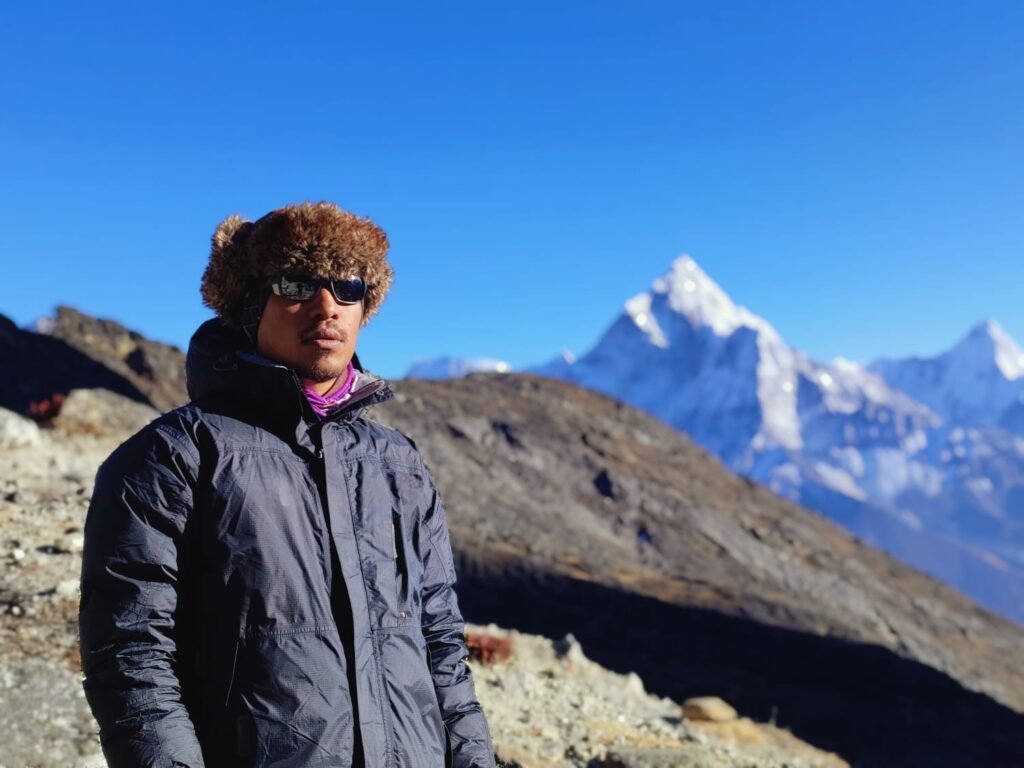


Who the Thakali Are
The Thakali are an ethnic group native to the Kali Gandaki valley, the river corridor that splits the Annapurna and Dhaulagiri massifs and once carried the salt and grain trade between Tibet and the Indian plains. Historically they were traders and innkeepers, running the clean, reliable lodges that made the high road passable for caravans, and that hospitality DNA still defines them — the Thakali hotel is legendary across Nepal for order, hygiene and good food. Annapurna Circuit Treks works with Thakali guides and lodge families from Beni up to Muktinath so the culture is lived, not performed.
Anthropologically the Thakali are fascinating: a small group, perhaps thirty thousand strong, who converted from their indigenous faith through Buddhism to Hinduism and back in waves, and who now practise a syncretic mix visible in their homes and gompas. They speak Thakali (a Tibeto-Burman language) alongside Nepali, and their clan system once governed the caravan economy. Our communities guide explains how trekking supports such groups, and the Thakali are the clearest example — a mountain people who turned a trade route into a hospitality tradition the whole region now relies on.
The Kali Gandaki: A Sacred Trade Corridor
The Kali Gandaki is the river that separates two 8,000 m peaks and carves the deepest gorge on the planet, and for centuries its valley was the highway of the Himalaya. Salt from the Tibetan plateau came south, rice and manufactures went north, and the Thakali managed the inns, the tolls and the pack trains in between. Annapurna Circuit Treks follows this same corridor on the [15-day circuit with Tilicho](https://annapurnacircuittreks.com/15-days-annapurna-circuit-tilicho-lake-trek/) and the shorter [Annapurna Circuit trek](https://annapurnacircuittreks.com/annapurna-circuit-trek/), and every teahouse stop from Tatopani to Jomsom sits on ground the caravans wore smooth.
The geography made the culture: a narrow, windy, arid valley where Tibetan influence bleeds south and Hindu plains culture pushes up, meeting in a Thakali blend unique to this strip. The river is also sacred to Hindus as a manifestation of the goddess Kali, and the black ammonite fossils (saligrams) washed down from the high slopes are worshipped as Vishnu. Walking the gorge with Annapurna Circuit Treks means reading the landscape as a trade ledger — the ruined forts, the paired Buddhist and Hindu shrines, the apple orchards planted where caravans once rested — a history lesson written in stone and terrace.
Thakali Villages Along the Route
The spine of Thakali settlement runs from Tatopani (1,191 m) through Ghasa, Lete and the orchard belt of Marpha (2,670 m) to Jomsom (2,740 m) and Kagbeni (2,800 m), the gate to restricted Upper Mustang. Annapurna Circuit Treks stays in family lodges in Marpha and Kagbeni, where the white-washed houses, the timber shutters and the flagstone lanes are preserved with pride. Marpha is the showpiece — apricot and apple walls, a Buddhist gompa above, and cellars of the local brandy that Thakali families have distilled for generations under the Dhaulagiri wall.
Kagbeni is older and grainer, a medieval-feeling village of tight alleys and a riverside fort where the culture tips from Hindu Thakali toward the Buddhist Mustang world just beyond the checkpoint. Our [Muktinath temple guide](https://annapurnacircuittreks.com/muktinath-temple-sacred-site/) covers the sacred site just above, and the [Manang and Mustang guide](https://annapurnacircuittreks.com/manang-mustang-annapurna-circuit-trek-nepal/) the northern extension. Walking this string of villages with a Thakali guide is to hear the dialects shift, the recipes change, and the faith lean from one tradition to the other within a day’s walk — a cultural gradient you simply cannot get on a single-village stop.
Thakali Food: The Famous Dal Bhat Tradition
No account of the Thakali is complete without the food, because the Thakali set meal — a thali of rice, lentil soup, two or three vegetable curries, spinach, pickle, sometimes mutton or fish, and a sweet — is the gold standard of Nepali hospitality. Annapurna Circuit Treks schedules a proper Thakali dinner in Marpha or Kagbeni so guests taste the real thing: clean, balanced, endlessly refillable, and far removed from the tired dal bhat repeat of a busy teahouse. The Thakali cook is trained from youth in portion, hygiene and pace, which is why their inns earned their reputation.
The cuisine blends Tibetan staples (tsampa barley flour, butter tea) with Hindu-plains curries and the local orchard produce — apples, apricots, walnuts. Our [traditional food guide](https://annapurnacircuittreks.com/traditional-food-annapurna-villages/) maps the regional dishes, and the Thakali thali is the centrepiece. Marpha apples appear in pie, juice and the eponymous brandy; the river yields the cold-water fish smoked over juniper. Eating with a Thakali family is to understand the culture through the palate: generous, ordered, proud, and built on the caravan logic that a well-fed traveller is a returning one, a lesson the whole Annapurna trail now inherits.
Religion and the Meeting of Two Faiths
The Thakali sit at a spiritual crossroads. Their villages hold both Hindu shrines and Buddhist gompas, and many families keep practices from both, a syncretism rare even in pluralist Nepal. Annapurna Circuit Treks’ guides explain the local Buddhism — the painted mani walls, the spinning prayers, the red gompas above Marpha — alongside the Hindu observance that grows stronger toward Muktinath, the sacred site where Vishnu and Shiva are both honoured. The monastery stays guide covers the Buddhist side; the [Muktinath guide](https://annapurnacircuittreks.com/muktinath-temple-sacred-site/) the Hindu-Buddhist pilgrimage that crowns the valley.
This dual faith is not confusion but layering: the Thakali absorbed each wave of influence without discarding the last, and a single household might spin a prayer wheel and light a butter lamp to a Hindu deity in the same morning. For the trekker it is visible everywhere — a stupa beside a Shiva lingam, a monastery wall painted with both pantheons. Annapurna Circuit Treks treats these sites with the respect they demand, briefing guests on the etiquette of entering a gompa or circumambulating a shrine, so the cultural encounter is genuine exchange rather than tourist spectacle, and the faith of the valley is met on its own terms.
Thakali Architecture and Village Design
Thakali villages are built for the wind and the sun. Marpha’s houses are flat-roofed, white-lime washed, with small windows facing the sun and thick walls against the Kali Gandaki gales; the lanes are paved with flagstone to channel the meltwater; the gompas sit on the high side to catch the dawn. Annapurna Circuit Treks points out these details because they are a textbook in adaptation — every element answers a climate and a caravan need, from the cellar for brandy to the flat roof for drying apples. The design is beautiful precisely because it is functional, honed over centuries on a harsh trade road.
Kagbeni’s architecture is older and more Tibetan, with mud-brick towers and a fortified feel at the Mustang gate, while Tatopani’s lower houses are greener and more plains-influenced, showing how the culture gradates with altitude. Our geography guide explains the zones; the villages are the proof. Walking from one to the next with Annapurna Circuit Treks is to read a built history of trade, faith and climate, and the preservation in Marpha especially — now a heritage zone — means the visitor sees the culture intact rather than eroded, a rare gift on a busy modern trekking route.
The Apple Country of Marpha and Tukuche
The orchard belt around Marpha and Tukuche is the Thakali heartland’s pantry, and the apple is its symbol — introduced in the mid-20th century and now the basis of a whole cottage economy of juice, jam, pie and the fierce local brandy. Annapurna Circuit Treks times autumn treks to the harvest so guests walk lanes heavy with fruit and taste the fresh press at a family cellar. The apple transformed the valley from a poor caravan stop into a prosperous orchard society, and the Thakali managed that shift with their usual organisation.
Tukuche, just north of Marpha, was once the richest trading town on the route and still shows grand old houses with carved windows, a monument to the caravan wealth that built the Thakali middle class. Our [food guide](https://annapurnacircuittreks.com/traditional-food-annapurna-villages/) covers the produce; the festivals guide the harvest celebrations. The orchard story is a neat parable of the culture — when the salt trade faded, the Thakali pivoted to apples and tourism rather than decline, and that adaptability, more than any single tradition, is the real Thakali inheritance Annapurna Circuit Treks wants guests to meet.
Festivals of the Kali Gandaki
The Thakali calendar blends Buddhist and Hindu festivals with local harvest rites. Losar, the Tibetan New Year, is celebrated with gompas decorated and families gathered; Dashain and Tihar, the national Hindu festivals, bring sacrifices, lamps and homecoming; and the apple harvest has its own informal revelry in Marpha. Annapurna Circuit Treks times some cultural treks to coincide with these, because a festival turns a village from a stop into a story. Our festivals guide lists the dates and what to expect across the region’s villages.
Muktinath’s festival calendar draws Hindu and Buddhist pilgrims year-round, peaking in the warmer months, and the [Muktinath guide](https://annapurnacircuittreks.com/muktinath-temple-sacred-site/) covers the pilgrimage rites — the 108 water spouts, the eternal flame, the bathing that devotees undertake despite the cold. Experiencing a Thakali festival with a local family is the deepest cultural access a trekker gets: you are fed, sung to, and included rather than observed. Annapurna Circuit Treks arranges homestays during festival time where possible so the encounter is intimate and the respect is mutual, a far cry from watching from the lane.
Thakali Hospitality and the Lodge Legacy
The Thakali invented the modern Nepali teahouse. When the salt trade declined, they applied their innkeeping discipline to the new trekking economy, running the cleanest, best-fed lodges on the circuit and training a generation of hoteliers who spread the standard nationwide. Annapurna Circuit Treks books Thakali family lodges deliberately, because the difference shows: ordered rooms, safe water, a real menu, and a welcome that feels like commerce refined into care. The legacy is why a ‘Thakali hotel’ anywhere in Nepal signals quality without explanation.
This hospitality is not accidental — it is the caravan inheritance professionalised. A Thakali innkeeper thinks in terms of the traveller’s whole journey: the meal timing, the bed warmth, the morning tea, the safe water, the fair price. Our teahouse etiquette guide helps guests reciprocate that care respectfully. Annapurna Circuit Treks sees the Thakali lodge as the cultural anchor of the Kali Gandaki walk, the place where the history of the route is still practised daily, and we brief every guest to notice it — to see the clean linen and the hot soup as a 400-year-old tradition, not a transaction.
The Muktinath Pilgrimage Above the Valley
At 3,800 m, Muktinath is the sacred climax of the Kali Gandaki cultural walk, revered by Hindus as a Vishnu site and by Buddhists as a place of the guru Padmasambhava, with 108 water spouts, an eternal flame fed by natural gas, and a gompa beside the temple. Annapurna Circuit Treks includes the Muktinath visit on the circuit and the 4×4 drives, and explains its meaning to both faiths so the trekker arrives informed. The [Muktinath guide](https://annapurnacircuittreks.com/muktinath-temple-sacred-site/) is the deep dive; here it is the cultural capstone of the Thakali story, where the valley’s dual faith reaches its highest expression.
Pilgrims bathe at the spouts despite the cold, circumambulate the shrine, and receive the priest’s blessing, while the Thakali and Mustangi vendors serve them in the courtyard — a living fusion of trade and devotion that the valley has run for centuries. The site also marks the cultural hinge: beyond it lies Buddhist Mustang, behind lies Hindu Thakali country, and the trekkerstands at the seam. Annapurna Circuit Treks frames the whole Kali Gandaki walk as a build-up to this moment, so the sacred site lands not as a photo op but as the answer to every cultural clue the villages have been laying down since Beni.
How Annapurna Circuit Treks Walks the Valley
We approach the Kali Gandaki as a cultural corridor, not just a trail to a pass. Annapurna Circuit Treks uses Thakali guides from the valley itself, stays in family lodges, schedules a cooking demonstration or a gompa visit, and paces the walk so the villages are savoured not sprinted. The [Annapurna Circuit](https://annapurnacircuittreks.com/annapurna-circuit-trek/) and the [7-day 4×4 drive to Manang and Tilicho](https://annapurnacircuittreks.com/7-days-4×4-drive-manang-tilicho/) both run this valley, and we add the cultural layer — a brandy cellar in Marpha, a prayer walk in Kagbeni, a thali in a Thakali home — that turns distance into meaning.
On the drive version the same culture is reached faster, leaving more time in the villages rather than on the road, which some guests prefer for exactly this reason. Our [cultural heritage tour](https://annapurnacircuittreks.com/annapurna-cultural-heritage-tour/) and [village homestay](https://annapurnacircuittreks.com/village-homestay/) pages describe the deeper immersion options, including overnights with Thakali families that go beyond a lodge stay. The point is authorship: we design each Kali Gandaki walk around the people who live there, so the trekker meets the Thakali as hosts and neighbours rather than props, and the valley’s long history becomes the through-line of the journey rather than a backdrop to the mountains.
Thakali Language, Clans and Social Life
Thakali society is organised into clans (thar) that once governed the caravan trade and still structure marriage, festival roles and village councils. The language, Thakali, is a Tibeto-Burman tongue now spoken alongside Nepali, and many older customs — the funeral rites, the household shrines — survive in it. Annapurna Circuit Treks’ guides translate not just words but the social logic, explaining why a certain clan runs the gompa or why the harvest feast falls when it does, so the visitor reads the village as a living system rather than a postcard.
Social life centres on the hearth and the orchard, on the evening gathering and the shared meal, and guests invited into a Thakali home see a culture of order and generosity that the lodge trade distilled into a brand. Our homestay experiences guide covers the deeper stays where this social life opens up. The clans are small and the diaspora large — many Thakali run hotels in Pokhara and Kathmandu — but the valley remains the heart, and walking it with Annapurna Circuit Treks is to meet the culture at the source, where the trade routes and the traditions that made the name are still visibly, daily at work.
The Caravan History and the Salt Trade
To understand the Thakali you must understand the salt. For centuries Tibetan rock salt moved south on sheep and yak packs through the Kali Gandaki, exchanged for rice and goods from the plains, and the Thakali organised the relay — the inns, the tolls, the pack trains, the winter stockpiles. Annapurna Circuit Treks tells this story on the walk because the valley is unintelligible without it: the fortified houses, the wide lanes for loaded animals, the cellars, the very cleanliness of the inns all trace to the caravan economy that made the Thakali wealthy and disciplined.
The trade collapsed with the Chinese closure of Tibet and the arrival of Indian iodised salt by road, and the Thakali pivoted to apples and tourism — a shift our communities guide frames as a model of adaptive resilience. Walking the empty caravan lanes above Marpha with a guide who knows the old toll points is to feel the history underfoot, and Annapurna Circuit Treks makes that feeling deliberate, pausing where the salt trains rested so the guest comprehends the scale of what built this culture. The mountains drew the eye, but the salt built the village, and both belong in the story we tell.
Comparing Thakali and Mustangi Culture
Just north of the Thakali, beyond Kagbeni, lies Upper Mustang, a Buddhist Tibetan kingdom with a distinct culture — the Lo people, the walled city of Lo Manthang, the cave dwellings. Annapurna Circuit Treks often pairs a Kali Gandaki walk with a note on this neighbour, because the contrast sharpens the Thakali identity: the Thakali are the Hindu-leaning, trade-adapted, orchard-keeping southerners, while the Mustangi are the Tibetan- Buddhist, arid-plateau, horse-herding northerners. The [Manang and Mustang guide](https://annapurnacircuittreks.com/manang-mustang-annapurna-circuit-trek-nepal/) covers the north; here the comparison clarifies the south.
Both peoples ran the old route, but their responses differed — the Mustangi closed and conserved, the Thakali opened and adapted — and the trekker walking from one to the other in a day or two sees the gradient. Our Thakali culture page (this article) is the southern anchor; the northern story is the counterpoint. Annapurna Circuit Treks uses the comparison not to rank but to reveal: the Annapurna region is a mosaic of adapted mountain peoples, and the Thakali are its most successful modern translators, turning an ancient road into a living hospitality culture that the whole trekking world now benefits from.
Thakali Culture and the Conservation Area
The Kali Gandaki lies inside the Annapurna Conservation Area, and the Thakali are among its most active local stakeholders — running lodges that fund the fees, participating in the management committees, and modelling the sustainable tourism the park promotes. Annapurna Circuit Treks pays the ACAP fee knowingly because it flows back to villages like Marpha for trail repair, school and clinic support. Our conservation area guide explains the mechanism, and the Thakali are its human face on the ground.
The culture and the conservation are intertwined: the orchards need clean water, the gompas need quiet, the villages need the trail to stay open but not overrun, and the Thakali have the institutional memory to balance these. Our plastic reduction rule and footprint offsetting guide extend the ethic to guest behaviour. Walking the valley with Annapurna Circuit Treks is thus a low-impact cultural exchange by design — the lodges are local, the guides are local, the food is local, and the fee circulates locally, so the encounter strengthens the culture it portrays rather than quietly eroding it for the next traveller.
Planning a Thakali Cultural Trek
A cultural focus changes the plan: more village time, a cooking class, a gompa visit, perhaps a homestay night, and a guide who is actually Thakali or long resident. Annapurna Circuit Treks builds this into the [circuit with Tilicho](https://annapurnacircuittreks.com/15-days-annapurna-circuit-tilicho-lake-trek/) and the [4×4 Manang Tilicho drive](https://annapurnacircuittreks.com/7-days-4×4-drive-manang-tilicho/), and offers the [cultural heritage tour](https://annapurnacircuittreks.com/annapurna-cultural-heritage-tour/) as a dedicated option. The best seasons are autumn and spring for clear travel and festival chances; winter is cold but atmospheric in the lower orchard belt; the monsoon is best avoided on the exposed gorge road.
Permits are the standard ACAP plus TIMS, handled in Pokhara, and Upper Mustang beyond Kagbeni needs the restricted RAP and a licensed guide, which we arrange. Our 2026 permits guide lists every fee. The practical tip Annapurna Circuit Treks gives every cultural trekker: slow down, accept the tea, learn three words of Thakali, and let the village set the pace — because the Kali Gandaki rewards the curious far more than the fast, and the Thakali, history’s great hosts, will meet your interest with a warmth that turns a walk into a relationship with a place and its people.
Thakali Influence Across Modern Nepal
The Thakali diaspora runs a disproportionate share of Nepal’s best hotels, from Pokhara’s Lakeside to Kathmandu’s tourist quarters, carrying the lodge standard nationwide. Annapurna Circuit Treks itself draws on this tradition — our Pokhara base sits in a hospitality culture the Thakali helped define, and many of the lodges we trust on the trail are Thakali-run. Understanding the culture thus enriches not just the Kali Gandaki walk but your whole Nepal stay, because the clean room and hot meal you enjoy anywhere may trace to this small valley’s discipline.
This influence is a quiet form of soft power: a thirty-thousand-strong group shaping how a whole country hosts the world. Our communities guide argues that trekking dollars, spent wisely with local lodge families, are among the most direct ways a visitor supports such cultures. Annapurna Circuit Treks channels bookings to Thakali family lodges precisely so the inheritance is rewarded, not just observed. The Thakali story — from salt caravan to hotel dynasty — is the Annapurna region’s best argument that tourism, done with respect and local authorship, can be a culture’s finest modern chapter rather than its ending.
A Day in a Thakali Village
A cultural day in Marpha or Kagbeni runs to the valley’s rhythm: up at first light as the gompa’s drums mark the hour, a breakfast of tsampa or bread and butter tea, a walk through the orchard lanes with the guide naming the apricot and the apple, a midday thali at a family lodge, an afternoon at the gompa or the brandy cellar, and an evening by the hearth hearing the caravan stories. Annapurna Circuit Treks structures the day so the guest participates — picking fruit in season, spinning a prayer wheel, learning the thali layout — rather than merely looking.
The pace is the point. Where a standard trek hurries to the next pass, a Thakali cultural day lingers, and the reward is relation not distance. Our homestay guide and [village homestay page](https://annapurnacircuittreks.com/village-homestay/) open the door to the overnight version, where the hearth talk runs late and the morning tea is brought by your host. Guests consistently name these village days as the soul of the trip, the moment the Annapurna became not just a view but a home they briefly shared, and Annapurna Circuit Treks builds every Kali Gandaki itinerary to make sure that moment arrives.
Why the Kali Gandaki Culture Matters to Trekkers
For the trekker the Thakali culture is the difference between walking through a place and meeting it. The mountains are the headline, but the valley’s human story — the salt, the inns, the faith, the apples, the adaptation — is what makes the Annapurna Circuit more than a scenic march. Annapurna Circuit Treks treats the culture as equal to the altitude in the itinerary, because guests remember the Marpha brandy and the Kagbeni gompa as vividly as the Thorong La. The circuit guide gives the route; this article gives the reason the route has a soul.
In a region where every trail competes on views, the Kali Gandaki competes on story, and the Thakali are the authors. Walking it with a local guide who knows the clans and the cellars turns a transfer day into a seminar in mountain life, and the respect guests feel for the culture translates into better behaviour on the trail and stronger support for the villages. Annapurna Circuit Treks’ bet is simple: meet the Thakali properly and you do not just complete the Annapurna Circuit, you understand why it became the most loved walk in the Himalaya in the first place.
Frequently Asked Questions
Who are the Thakali people of the Kali Gandaki?
The Thakali are a small ethnic group native to the Kali Gandaki valley, historically the traders and innkeepers of the salt caravan route between Tibet and India. They are famed across Nepal for clean, well-run lodges and excellent food, a hospitality tradition born of the caravan economy. Today they practise a blend of Buddhism and Hinduism, speak Thakali alongside Nepali, and run many of the best hotels from the valley to Pokhara and Kathmandu. Annapurna Circuit Treks walks the valley with Thakali guides and family lodges.
What is Thakali food like?
The Thakali set meal, or thali, is the gold standard of Nepali hospitality: rice, lentil soup, two or three vegetable curries, greens, pickle, sometimes mutton or smoked river fish, and a sweet, all refillable and impeccably presented. It blends Tibetan staples like tsampa and butter tea with plains curries and local orchard produce — Marpha apples appear in pie, juice and brandy. Annapurna Circuit Treks schedules a proper Thakali dinner in Marpha or Kagbeni so guests taste the real tradition rather than a teahouse imitation.
Which villages show Thakali culture best?
Marpha is the showpiece — white-washed, apple-walled, with a gompa above and brandy cellars — followed by Kagbeni at the Mustang gate with its medieval Tibetan feel, and the orchard belt of Tukuche and Lete. Tatopani lower down shows the plains-influenced edge. Annapurna Circuit Treks stays in family lodges in Marpha and Kagbeni and pauses at the caravan lanes and gompas so the culture is met intact. The Muktinath pilgrimage just above is the sacred capstone of the valley’s dual-faith story.
Can I experience Thakali culture on a short visit?
Yes. Even a few days on the Kali Gandaki, as part of the Annapurna Circuit or a 4×4 drive, lets you stay in a Thakali lodge, eat a thali, visit a gompa and taste the apple brandy. For deeper access, Annapurna Circuit Treks offers homestay nights and cooking demonstrations through our cultural heritage and village homestay options, and times some treks to festivals like Losar or the harvest so the village is at its most alive and welcoming to guests.
Do I need special permits for the Kali Gandaki cultural walk?
The valley itself needs only the standard ACAP permit and TIMS card, which Annapurna Circuit Treks handles in Pokhara. Beyond Kagbeni, Upper Mustang is restricted and requires the special RAP plus a licensed guide, arranged separately. Our 2026 permits guide lists every fee and document. No extra permit is needed for the Thakali villages from Beni to Muktinath, but respecting gompa and temple etiquette is expected, and our guides brief you on the proper conduct at each sacred site.
Plan Your Annapurna Adventure
The Annapurna region rewards preparation. Annapurna Circuit Treks runs fixed-departure and fully custom Annapurna treks from our Pokhara base — licensed guides, community lodges, and transparent 2026 pricing. Browse our [Annapurna trekking guides & packages](https://annapurnacircuittreks.com/annapurna-trekking-guides-packages/) or talk to a [local expert](https://annapurnacircuittreks.com/contact-us/) before you fly.
*— Annapurna Circuit Treks, Pokhara*
Related reading: Culture & Ethnic Communities of Annapurna Region: Discover the Living Heritage of the Himalayas | Is Annapurna Trek Safe? Complete Annapurna Trek Safety Guide for First-Time & Experienced Trekkers | Annapurna Circuit with Tilicho Lake Trek – 13 Days: Full Itinerary & Guide