The Ultimate Itinerary for Conquering the Annapurna Circuit trek with best guide.
The Annapurna Circuit Trek is a journey of a lifetime, blending dramatic mountain scenery with rich cultural experiences in the heart of Nepal.
Trip Info
-
Tea House
-
Autumn (September – November) / Spring (March – May)
-
Bus,Jeep
-
Experiance & Licensed
-
3
-
75
Overview
Experience the “Holy Grail” of trekking in a condensed, high-impact 10-day itinerary of Annapurna Circuit. This package is designed for adventurers who want to skip the lower dusty roads and dive straight into the heart of the Annapurna Massif. From the lush pine forests of Chame to the arctic desert of the Thorong La Pass and the spiritual sanctuary of Muktinath, this journey offers the world’s most diverse landscapes in a single trip.
Highlights
- Thorong La Pass (5,416m): Conquer the widest mountain pass in the world.
- Manang Culture: Immerse yourself in ancient Tibetan Buddhist traditions and monasteries.
- Dramatic Scenery: Witness the "Great Ice Wall" and the 1,500m curved rock face of Paungda Danda.
- Muktinath Temple: Visit the sacred eternal flame and 108 water sprouts.
- The Kali Gandaki Gorge: Travel through the world’s deepest gorge on your way to Pokhara.
Itinerary
This 10-day Annapurna Circuit itinerary is a carefully designed fast-track adventure that highlights the most scenic and culturally rich sections of the classic route while ensuring proper acclimatization and safety. Beginning with a scenic drive from Kathmandu to Dharapani, the journey gradually transitions from lush river valleys to dramatic high-mountain landscapes. The trek passes through traditional Himalayan villages, dense pine forests, and panoramic viewpoints, offering close-up views of the Annapurna range.
The itinerary includes a crucial acclimatization day in Manang, allowing trekkers to adapt to altitude before ascending into the alpine zone. The crossing of Thorong La Pass (5,416m) stands as the ultimate highlight, rewarding trekkers with breathtaking Himalayan vistas and a profound sense of achievement. The journey concludes with a descent to the sacred site of Muktinath and a scenic drive through the Kali Gandaki Gorge to Pokhara, followed by a return to Kathmandu. Overall, this itinerary offers a balanced combination of adventure, culture, and natural beauty, making it ideal for trekkers seeking a comprehensive Annapurna Circuit experience within a limited timeframe.
The journey begins with a long yet rewarding drive from Kathmandu along the Prithvi Highway, following the Trishuli and Marsyangdi rivers. As the road winds through terraced farmlands, rural settlements, and lush green hills, the scenery gradually transforms into a rugged mountain landscape. Dharapani serves as the official gateway to the Annapurna Circuit and marks the transition from road travel to the trekking adventure ahead.
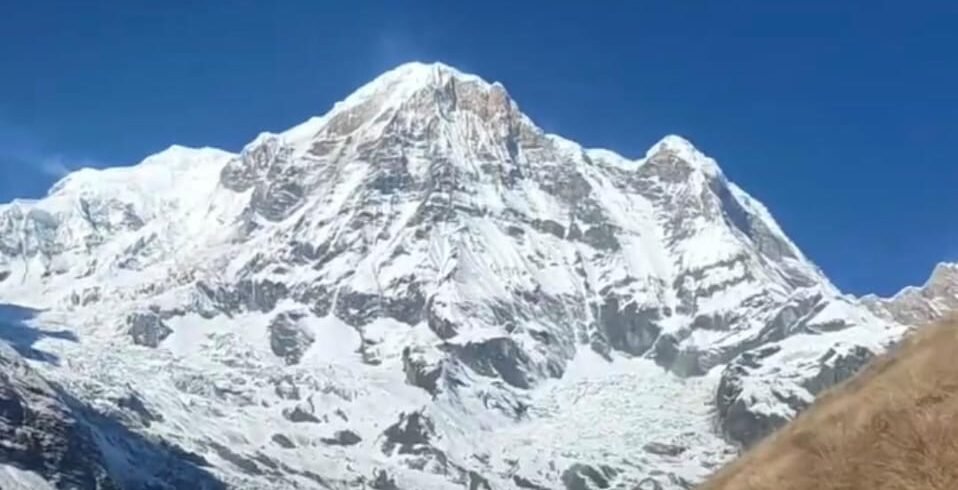
Today’s trek enters the Manang District, where the air becomes cooler and the vegetation denser with towering pine and fir forests. The trail passes through traditional villages and suspension bridges while offering the first close-up views of Annapurna II. Chame, the district headquarters of Manang, sits beneath dramatic mountain cliffs and provides a true Himalayan village atmosphere.
The trek continues through a spectacular narrow valley dominated by the famous “Great Ice Wall,” a massive 1,500-meter-high curved rock face rising sharply above the trail. As altitude increases, the landscape becomes drier and more alpine. Overnight in Upper Pisang allows trekkers to experience traditional Tibetan-style settlements and enjoy exceptional sunrise and sunset views over the Annapurna range.
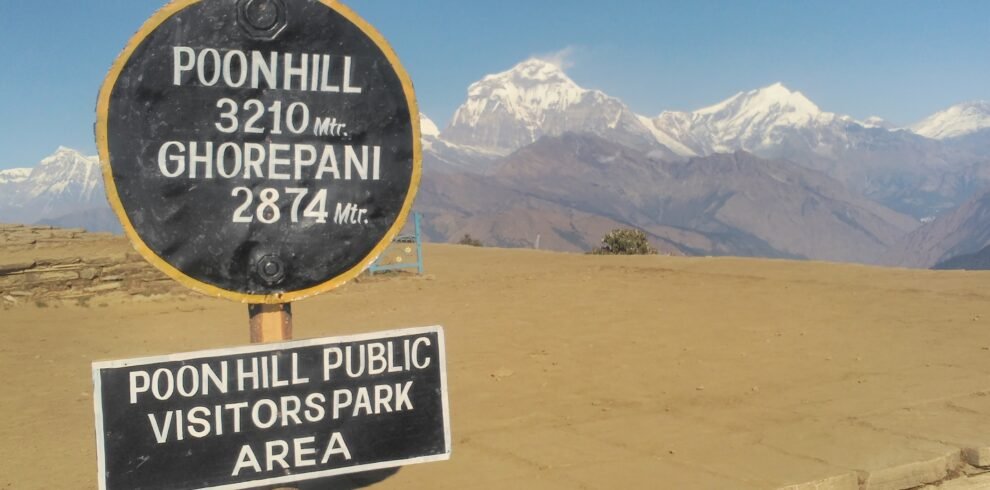
This day follows the renowned “Panoramic Trail,” taking the higher route via Ghyaru and Ngawal. Although more demanding, this trail rewards trekkers with sweeping views of Annapurna II, III, IV, Gangapurna, and Tilicho Peak from above the valley floor. The descent leads to Manang, the cultural and logistical hub of the region, surrounded by dramatic Himalayan scenery.
A crucial acclimatization day to ensure safety and proper adjustment to altitude. Short hikes are recommended, including visits to the turquoise Gangapurna Lake or the ancient Braga Monastery, one of the oldest monasteries in the region. The day also provides an opportunity to explore Manang village, interact with locals, and prepare physically and mentally for higher elevations.
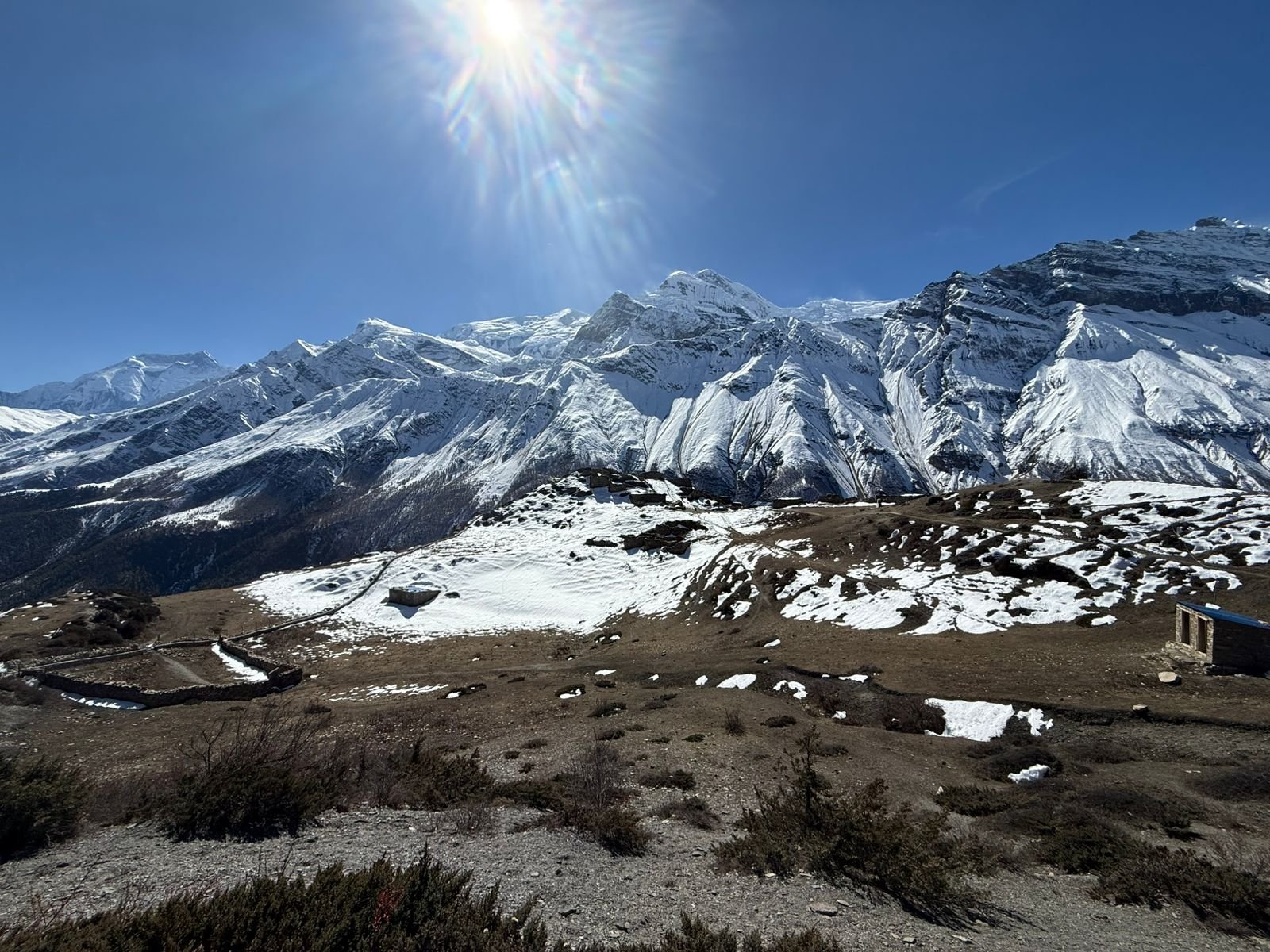
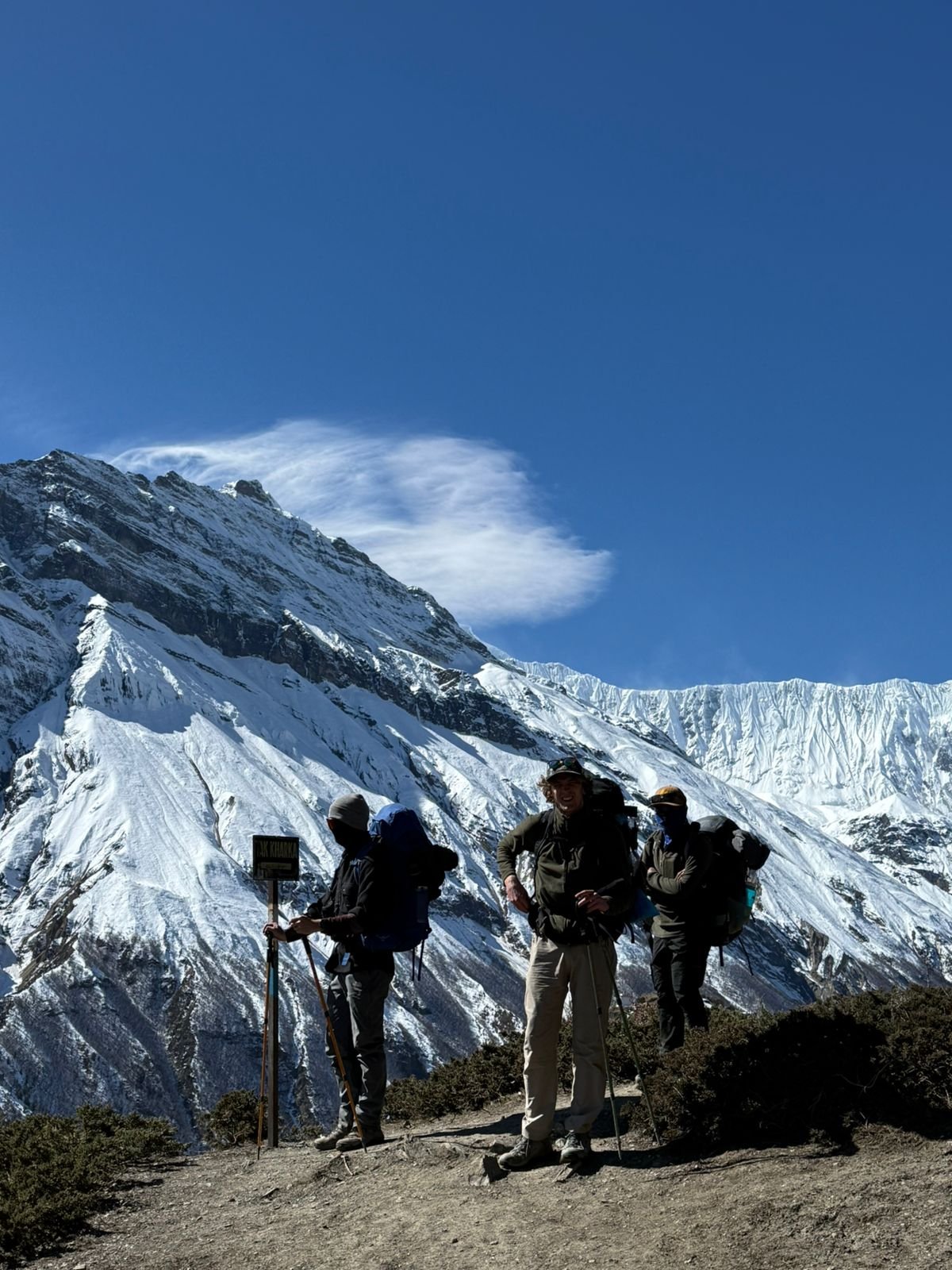
The trail gradually ascends above the tree line into open alpine terrain. Walking time is shorter to support acclimatization as we cross the 4,000-meter mark. The landscape is dotted with grazing yaks and, with luck, sightings of Blue Sheep. Yak Kharka is a small high-altitude settlement surrounded by vast pastures and mountain vistas.
A steady climb brings us closer to Thorong La Pass. The environment becomes stark and dramatic, resembling an arctic desert with sparse vegetation and powerful mountain winds. Thorong Phedi sits at the base of the pass and serves as the final overnight stop before the summit crossing. An early dinner and rest are essential in preparation for the challenging day ahead.
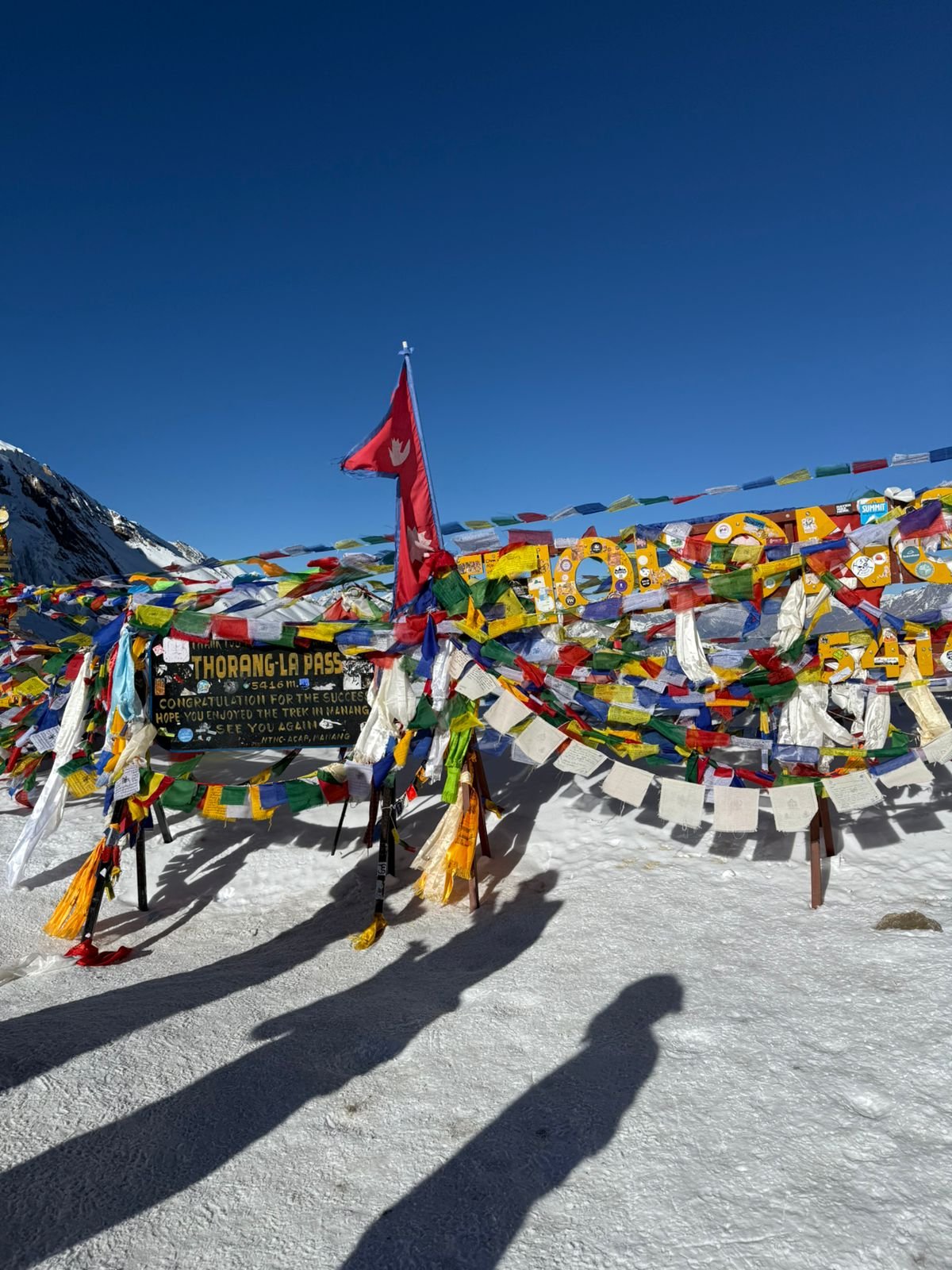
The most challenging and rewarding day of the trek begins before dawn, around 4:00 AM. After a gradual ascent, we reach Thorong La Pass, the world’s widest high mountain pass, marked by prayer flags and panoramic Himalayan views. After celebrating this major achievement, a long descent of approximately 1,600 meters leads to Muktinath, a sacred pilgrimage site revered by both Hindus and Buddhists.
After visiting the Muktinath Temple, the journey continues by vehicle through the Kali Gandaki Gorge, the deepest gorge in the world, flanked by Annapurna and Dhaulagiri. The dramatic landscapes gradually give way to greener hills as we arrive in Pokhara, Nepal’s most popular tourist city, where a relaxing lakeside evening awaits.
The trek concludes with a return to Kathmandu either by a scenic 25-minute flight offering Himalayan views or a comfortable 7–8 hour tourist bus ride through Nepal’s countryside. Upon arrival, enjoy a farewell dinner in the capital, reflecting on an unforgettable journey across one of the world’s classic trekking routes.
Includes / Excludes
What’s Included
- Permits: ACAP (Annapurna Conservation Area) and TIMS card.
- Transport: Shared Bus/Jeep (KTM-Dharapani), Jeep/Bus (Muktinath-Pokhara), and return to KTM.
- Food: Full board ( Breakfast, Lunch , DInner during Trek)
- Accommodation: 9 nights in local teahouses/lodges (twin-sharing).
- Staff: Government-licensed English-speaking guide.
- Safety: Pulse oximeter for oxygen checks and a comprehensive first-aid kit.
Cost Excludes
- Nepal Entry Visa and International flights.
- Travel and Rescue Insurance (Mandatory).
- Personal trekking gear (Boots, down jackets, sleeping bags).
- Tips for guides and porters.
Annapurna Region Trekking Guide
Frequently Asked Questions
The full classic route is 160–230km (14–22 days). However, our specialized 10-day itinerary uses private 4WD transport to skip the lower dusty roads, focusing only on the high-altitude highlights.
The trek starts with a drive from Kathmandu to Dharapani. It effectively “ends” with a trek into Muktinath, followed by a scenic drive to Pokhara and a return to Kathmandu.
While solo trekking is possible for some, for a 10-day “fast-track” itinerary, a guide is highly recommended to manage complex logistics, transport, and safety during the high pass crossing.
You need two permits: the ACAP (Annapurna Conservation Area Permit) and the TIMS (Trekkers’ Information Management System) card. These are included in our package.
It is considered challenging. Because the itinerary is condensed, you will gain altitude quickly. You should be in good cardiovascular shape and have some hiking experience.
The highest point is the Thorong La Pass at 5,416m (17,769 ft). This is a significant altitude that requires slow pacing and proper acclimatization.
Focus on endurance (running, swimming, or cycling) and leg strength. We recommend training for at least 2–3 months before your trip, including long walks with a weighted backpack.
Our guides are trained to spot early symptoms of AMS (Acute Mountain Sickness). The itinerary includes a mandatory rest day in Manang. If symptoms persist, the golden rule is always to descend immediately.
The best windows are Autumn (October–November) for crystal clear views and Spring (March–May) for rhododendron blooms and warmer weather.
It is possible but not recommended. Winter (Dec–Feb) is dangerously cold with a high risk of the pass being closed by snow. Monsoon (June–Aug) brings leeches, rain, and potential landslides.
At lower altitudes, it’s a pleasant $15text{°C}$ to $20text{°C}$. Above 4,000m, night temperatures regularly drop to -10°C or -15°C.
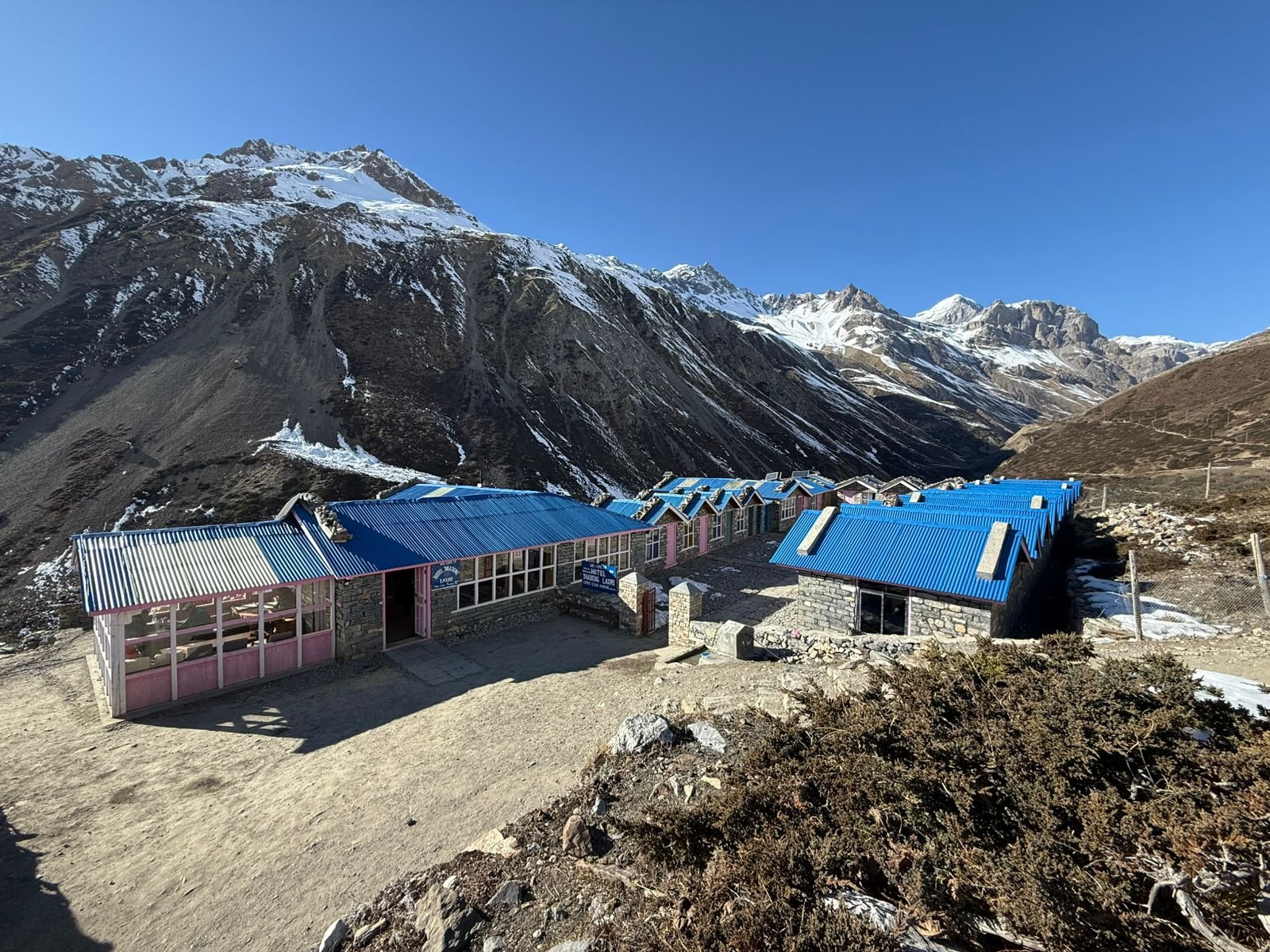
Teahouses are simple mountain lodges. You get a twin-sharing room with a bed and blanket. Common areas are heated by a central stove, but bedrooms are usually unheated.
The staple is Dal Bhat (lentils, rice, and curry)—it’s “24-hour power!” You can also find pasta, pancakes, eggs, and even “mountain pizza.”
Do not drink tap water. Use water purification tablets, a SteriPen, or a filtered bottle (like LifeStraw). Avoid buying plastic bottled water to help protect the environment.
Yes, most teahouses offer Wi-Fi and charging for a small fee ($2–$5). However, connections become less reliable as you get higher.
Worn-in trekking boots, a high-quality down jacket (rated for -15°C), and a good sleeping bag are the “Big Three.”
Yes! You can rent sleeping bags and down jackets in the Thamel district for about $1–$3 per day.
We recommend $20–$30 USD (in Nepali Rupees) per day for snacks, hot showers, Wi-Fi, and tips. There are no ATMs between Chame and Muktinath.
A porter typically carries 12–15kg per trekker. You will still carry a small daypack (5–7kg) with your water, camera, and layers.
Yes. Your insurance must specifically cover emergency helicopter evacuation at altitudes up to 6,000m.